Henrietta Lacks’s family has decided, since 1951, which uses of her cells are allowed. The permission is the NFT. The family is the DAO.
I gave this talk at DeSci NYC on 12 April 2023, during NFT NYC. The whole point is data permission: the permission to use data.
Entry level. Nothing is expected of you.
Video: NFT NYC #5 — William Entriken (NFTs in Science) (I start at 8:13.)
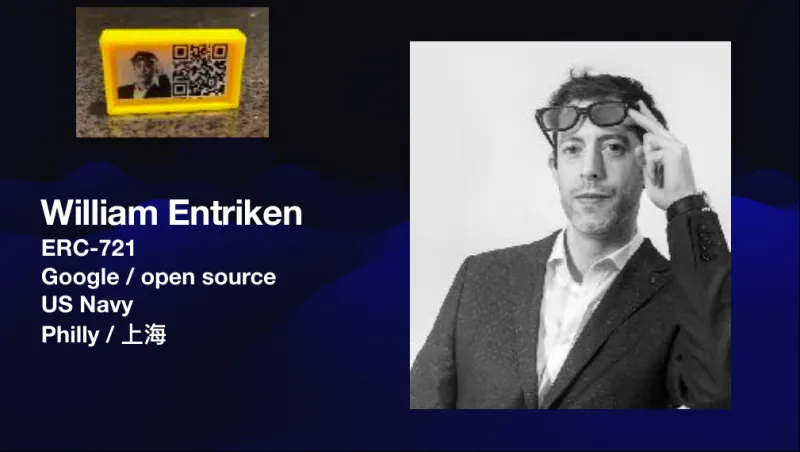
I’m William Entriken. Lead author of ERC-721, the document that says what an NFT is. If you are making NFTs, you are following that spec.
I worked at Google for a minute. I started in open source, building communities and mentorship programs, and that is how I later found blockchain. I worked at the US Navy for a minute. I do business in Philadelphia and Shanghai.
This is a broad discussion. Data DAOs, specifically. The permission to use data.
The most copied cell in biology
That’s xkcd 365.
Now if you’ll just bear with me for a moment, I’d like to show you a very close-up photo of a cervical cancer biopsy.
US National Institutes of Health, scanning electron micrograph, Zeiss Merlin HR-SEM.
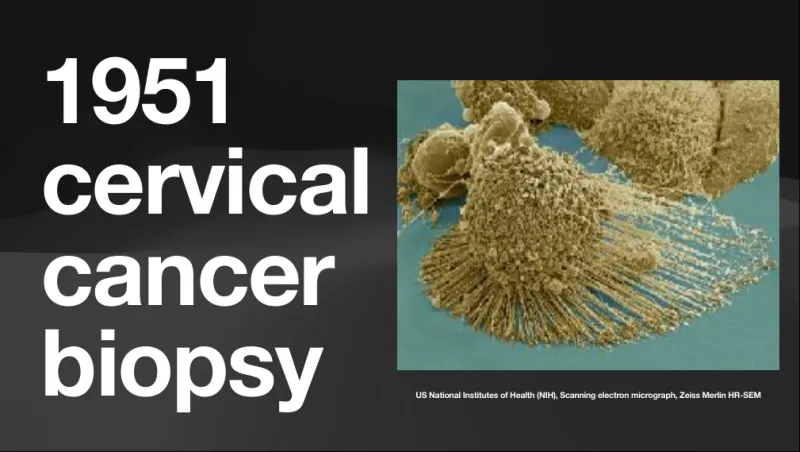
This is the most copied cell in biology. It is a human cancer cell from 1951. Polio research, cancer, AIDS, anything that has to be tested with DNA. Because it is a human cell, and humans are often the things we are trying to cure, this is the basis across biology.
Where did it come from?
Henrietta Lacks, Harvard University
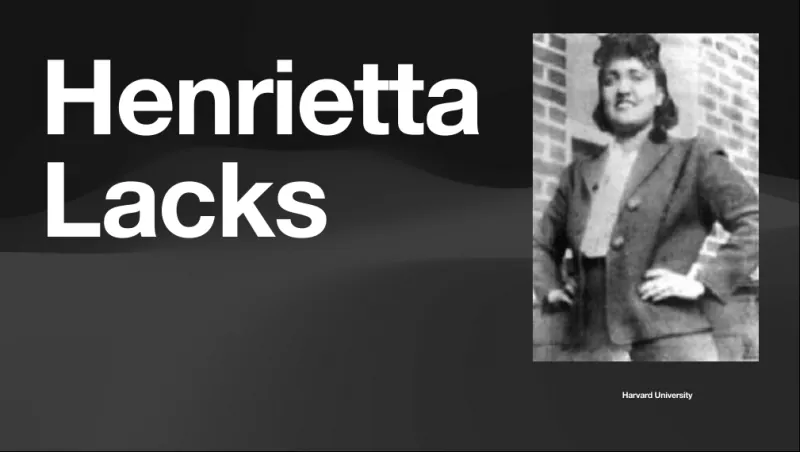
Henrietta Lacks presented to Johns Hopkins in 1951 with pain in the womb after childbirth. Doctors took the biopsy without consent and shared it with other schools.
If you have done cancer cell research, you know a nice warm sample lasts three or four days. This one persisted. Immortal cell line. Days? Weeks? Millennia. We are still using it today. Billions in sales.
When cells divide, there is code in DNA. The end of it does not matter, and when you cut it a bunch of times the end trails off. This one does not. You can keep cutting it and make perfect copies forever.
Key part of the story: they never got consent from her to use this cell, or to sell it.
This is 1951. Two things you need to know. One, Black people were given free medical care at Johns Hopkins, and there was a segregated system, and they did different things then that they do not do now. Two, it was common practice to take the cells without permission. The people selling her cells acknowledge they would not do this now. They are doing this now.
The first data DAO?
Her descendants come in and say: we would like to participate in the decision-making of the usage of these cells. They are descendants, so it is also their cells. If you have ever signed up for 23andMe, or your dad, or your mom, or your grandparent did, that is you too. You are all signed up together.
They are now suing various laboratory companies for the improper use and profit from these cells. Lawsuits ongoing. They are also now frequently consulted by ethics committees on which uses of the cells are appropriate.
If her family are stakeholders in this cell line, and they are talking about participating in the science, is this the first data DAO?
Who is decentralized? The family members. Autonomous: nobody else is telling them what to do. Organized: they are very organized.
The best way to understand the world is to compare the things you already know. This is from 1951. No technology needed.
NFTs for data permission?
Let’s formalize this.
The cells are called HeLa cells. Henrietta Lacks, HeLa. Every time they are used legitimately, with the family’s consent, they tokenize that.
I wrote this up in 2020 with Daniel Uribe: Biosample permission token with non-fungible tokens.
By tokenize I mean: they write it down in a record. They put it in a ledger. That is an NFT. A unique item in a ledger. It can be written on a chart. It can live in Excel. It can be a piece of paper. That is a ledger. That is an NFT. We can also do NFTs on a blockchain. That is cool too.
We need provable attestations of permission to use data. That is intellectual property. Permission was granted.
If you are using this cell for research and you are permitted, you want to know that. If you are doing an ethics committee review at your school, and they do not want stolen cells from a civil rights case seventy years ago, and you say they approved it, how many times have you had to prove to your ethics council where you got your stuff from?
That is changing. We are going to start demanding these things.
This is a high-profile cell. If they say it is true and put it on their website, that is gold. For less visible projects you want it somewhere. Blockchain, a website, an email chain you can copy, paste, and prove. You want something.
These attestations may or may not be transferable. They may or may not be sublicensable. NFTs may or may not be transferable. NFTs can be on blockchains. NFTs can live in Excel.
I am a very practical guy. I want these applications to work. I am not telling you to use blockchain, or Ethereum, or ERC-721. I want you to make better systems, and attribute when attribution is due.
Who do science DAOs benefit?
In this situation, her family.
They want two things. Money for the money that was made off the cells. And a say in where the research is used. Run it by us. Why are you using these cells? What outcomes are you working on?
There have been documentaries and books. People would like to give credit. Celebrate the woman who unwittingly gave these cells, and helped polio and AIDS vaccines and all types of things that were possible because of this. The family has an interest in recognizing that.
That is a beneficiary of attribution of data in science.
Quick survey. Raise your hand if you are of European descent. Keep it up if you identify as white. This is science, so we can say these things. If your hand is up, you are overrepresented in pharmaceutical research. You are overrepresented in DNA research and in therapies based on DNA. That is a problem. If your hand was down, you are an opportunity to improve the sample.
That is what I have been working on.
Somos
Disclosure: client work. Not a current client.
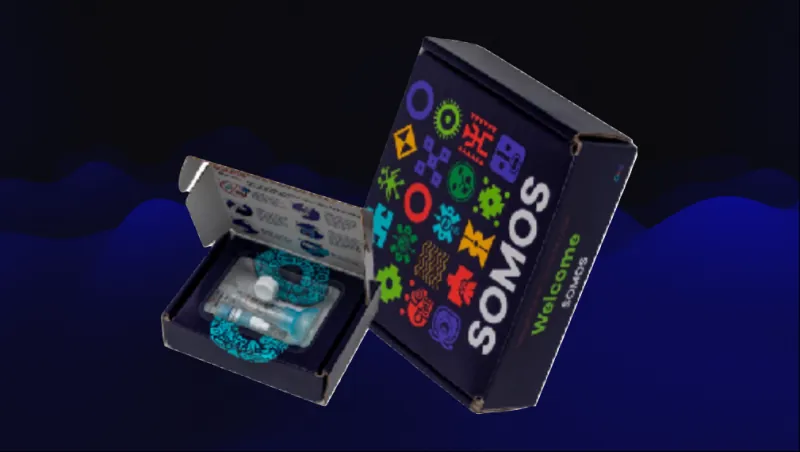
Somos. A DNA test kit. It works like 23andMe. You open it up, there is a test kit.
Some laws in the US are dumb. You have to give your name when you give DNA. We worked around that with a default name. The name is a seed phrase. Twelve words. Crude, well-known, and it works for creating identity digitally.
When the test comes back, you decide where your data is used.
This system is specifically for Indigenous Latinos in South America. There is a lack of diversity in DNA sequencing and drug testing. Pharma wants more diverse samples so that when they launch drugs they do not just fail a population that was never in the study.
We are not just taking their data. They participate. They have visibility and traceability all the way down the supply chain.
Do this in more places. Data DAOs plus supply-chain traceability of data, specifically DNA.
Molecule
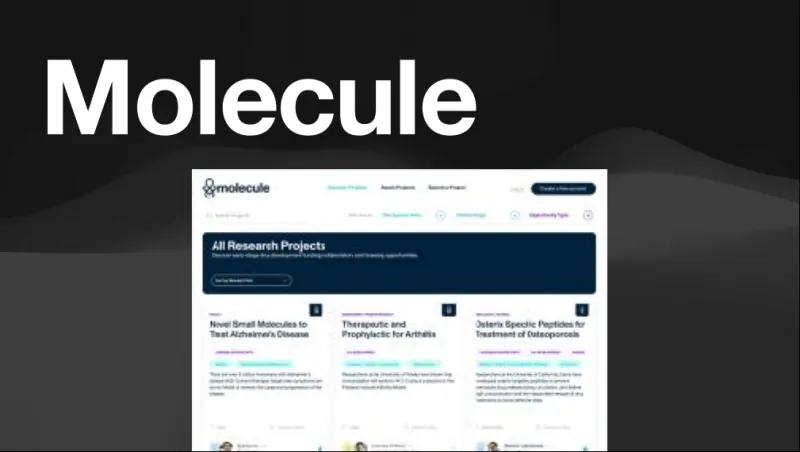
Other ways NFTs can benefit science. I looked at Molecule.
I say good things, I say bad things.
What you are looking at is specific research projects you can be a stakeholder in. Novel small molecules for Alzheimer’s. Therapeutics for arthritis. Osteoporosis peptides.
This one is more interested in the money. Their mission says they are creating liquid and easily investable assets. I checked the SEC website. I did not see them registered in EDGAR. Watch out for that. The SEC is currently years behind on bringing lawsuits. If something is less than five years old, get a lawyer.
I am not saying this is a bad thing. I am a very practical guy. I do not want you in jail. I have not been in jail. Does that make me not an OG?
I want these things to work. I want different types of stakeholders represented in science.
Ethics
Biotech innovations raise ethical questions every time. Ownership and permission issues must be addressed. Data privacy and security concerns exist, and blockchain does not specifically solve them. Consensus systems in a DAO usually mean some people’s votes don’t take effect.
I do not have the answers. If you have more stakeholders, more diverse stakeholders, you will get more answers. If you are smart, maybe better answers. Ownership and permission at least visible.
A little better. That is what I am going for. Better.
If you have something valuable, like DNA access that other people do not have and you paid for, maybe you keep it secure because you paid for it. If you went through an ethics committee and paid for the data, why would you put it on a website so everyone else publishes first? Publish. Get your stuff out. Have the rare commodity you are using.
Unlike the HeLa cell line, when you have a lot of participants with diverse opinions in a DAO, something you need to watch out for: a lot of the time we say DAO and we are just doing majority voting, or quadratic voting, which is not quadratic. Quadratic funding is the other one.
If there is a voting system, that is a consensus mechanism. If it is enforced on chain, some people’s vote will not be the way the thing goes. They are submitting to the outcome. Rule by committee. Human cooperation, Robert’s Rules, committees have been studied forever. Some people will not be happy with the outcome.
That is different from every person individually making a decision.
I have a weekly call for these high-level topics, and for going much deeper technically on things you are doing.
One more thing
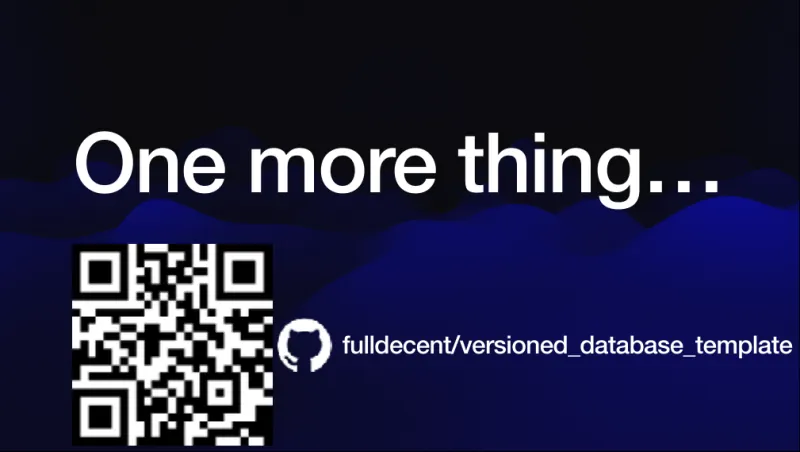
I wanted to bring original research you can take home and use.
Who does not use SQL for data science? Who uses graph databases for data science in medical research? Zero. No one. SQL.
The long version is Moon dust: auditable, versioned databases.
fulldecent/versioned_database_template. A simple template for SQL databases. SQLite. On a Mac you already have sqlite3. You do not have to download anything.
Everything you do creates an audit trail. Every record you put in, every record you modify, has an ID, and these IDs add up.
Does anybody know another type of database that has immutable records that are append-only? Blockchain.
We stole the most important part of blockchain and brought it down to SQL, which is what we are already using. Triggers, too nerdy, with triggers, so you have an append-only database.
How do you quickly summarize information in a blockchain, where you can expose some of it but not all of it? How do you summarize anything? Hash it. Hashes of hashes? Merkle root. Merkle trees. This lets you have a database where you expose some of it.
You do not need blockchain. If you are in big pharma you do not need to go to legal and say we are going to do a blockchain project. You go to your data people and say we are going to do a SQL project. That is how you get things passed.
Take the smallest knife and make an incision. If you have blockchain ideas and you actually want to use them, do them with your existing team.
Questions I got
How do you prove the hash has not been mutated?
Attestation, plus digital security. How does blockchain prove records are authentic and created by the people they claim? A signature. How do those signatures tie back to people we care about? Not “put the DID on a blockchain” as the answer. How do you know which website is Google’s? DNS. A centralized registry. Same techniques apply to databases. Store signing keys in DNS. Sign databases. Sign hashes. Publish anywhere. All of this exists and does not require blockchain. Use blockchain. It is great. These ideas are simple enough to get done anywhere. No excuses.
You said skip the legal review?
I did not say skip regulation. I said do not sell “blockchain project” internally if you can sell “audit trails on our databases.”
I helped Ernst & Young work with Microsoft to change how they record royalties on Xbox. I worked with 200-year-old French watch brands on how they authenticate merchandise. They changed the certificate of authenticity. Merck Animal Health uses blockchain in production for drugs they sell for animals. These things work.
When you are selling it internally, do not say we are going to launch this on Ethereum. They will say no. Say we are going to add audit trails. They will say we do not have audit trails? You forgot to turn that on in SAP. Turn it on in SAP. That is the first step to hashing databases and providing attestation.
By the time you are done you have introduced assurances for records, attestations, verifiable records, 99% of blockchain, and you get the benefits. You are doing good business stuff you should have been doing anyway. Use different words.
It does not matter whether the end state is a public network. Large organizations will have to do these steps anyway. Either you ask for audit trails, attestations, hashes, customer-auditable records, and an Ethereum rollup with zk-proofs, or you ask for A, B, C, D. Same place. Smaller steps. Faster. It is also likely you will not need that last step.
I am the first person to tell you: you do not need NFTs on a blockchain. A client said they want to improve inclusion of different ethnic groups in pharmaceutical research, and they want to use NFTs. Yes, maybe. You could get this to market faster without blockchain. Good enough. Their mission is improving medical outcomes for a diverse population. I support that.
Which part is the ERC-721 part? What is stored there?
The data permission is the NFT.
Non-fungible token: non-fungible means a number, token means worthless. It is a worthless number. That is what an NFT is. People like NFTs because they represent other stuff.
I have a car title. I care about the car. Does anybody know the number on their car title? No. They do not care. Worthless number. But if that number represents permission to use data in an experiment, that is the same number you give your professor to sign off on the research. If they look it up and it is 404, you are not getting funded.
The data is not in the NFT. Just the permission. You get access to the data after you pay, by whichever mechanism. Your authorization, which you prove to other people, is this number, which you can look up.
Take this with you
- An NFT is a unique item in a ledger. Excel counts. A chain counts. A chain is optional.
- The useful NFT in science is a permission, not a JPEG, not the dataset itself.
- HeLa is the first data DAO, from 1951, with no technology required to understand it.
- If you work in a company that matters, ask for audit trails and signed hashes.
- The SQL template is at
fulldecent/versioned_database_template.
▧
Comments
There are no comments yet.
Please discuss this topic anywhere and let me know any great comments or media coverage I should link here.