Blockchain has a lot of great ideas, but we never got the great apps and interfaces I was hoping for. The missing layer is simple: people need a trustworthy, usable explorer that makes on-chain reality legible. A block explorer should be the base component for people to trust and interact with any blockchain.
The best explorer is not just a list of transactions. It is a system for telling the truth about what happened, who controls what, what is dangerous, and what a reasonable user should do next.
I built a prototype for that idea and called it Hash4eva. The demo is intentionally opinionated. It treats security and identity as first-class features rather than as afterthoughts hidden behind raw data tables.
You can browse the demo pages here:
- Hash4eva home
- Hash4eva account page
- Hash4eva contract page
- Hash4eva transaction page
- Hash4eva incidents page
- Hash4eva weekly market page
- Hash4eva followed accounts page
- Hash4eva demo scenarios
The core premise
A blockchain explorer should answer four questions quickly:
- What is this address, contract, or transaction?
- Who controls it?
- What is risky or suspicious about it?
- What should a normal person do next?
That means the product should be designed around truth, context, and action. The interface should make the important facts visible before the user has to dig through logs and storage dumps.
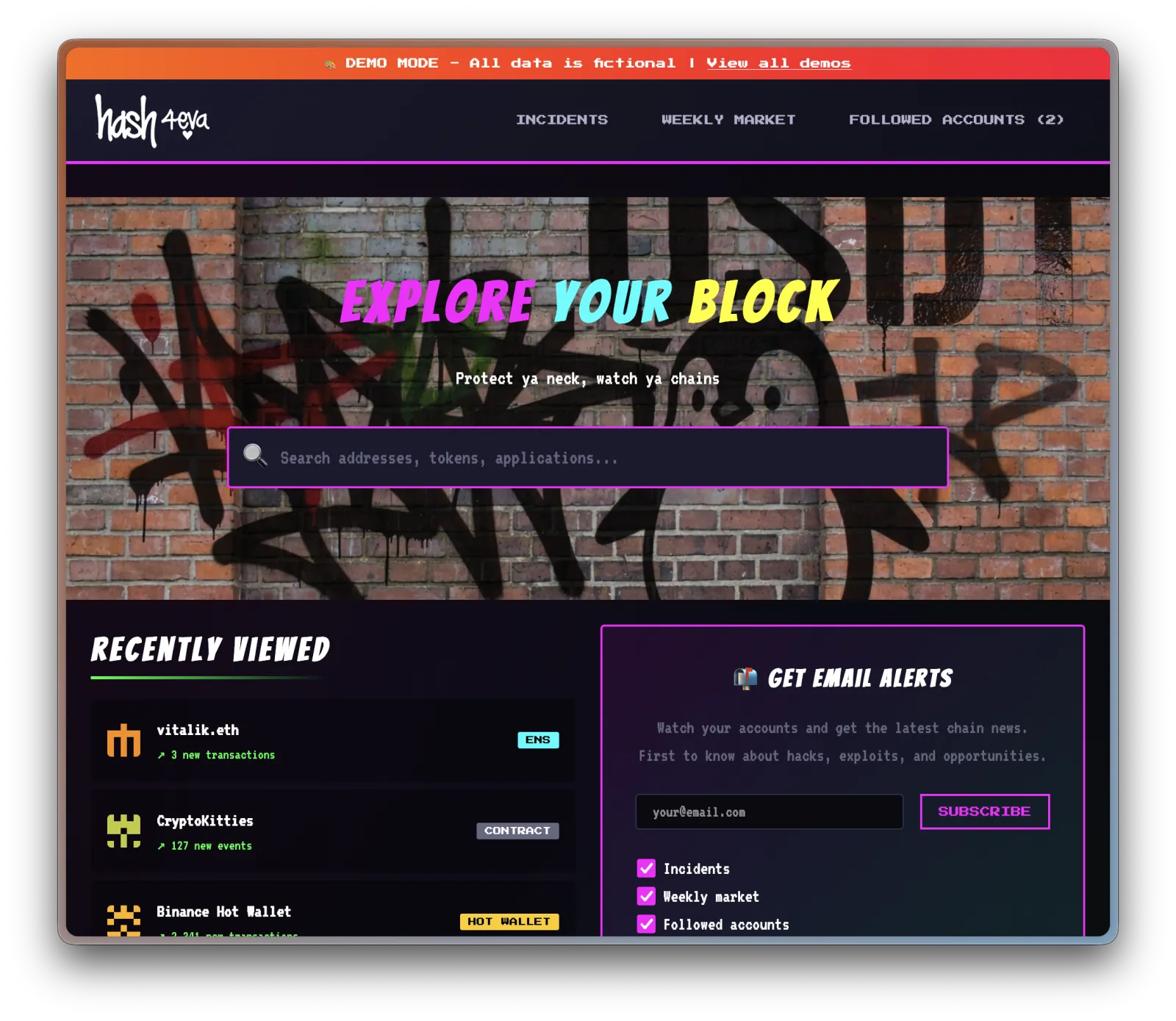
The homepage should feel like a helpful assistant
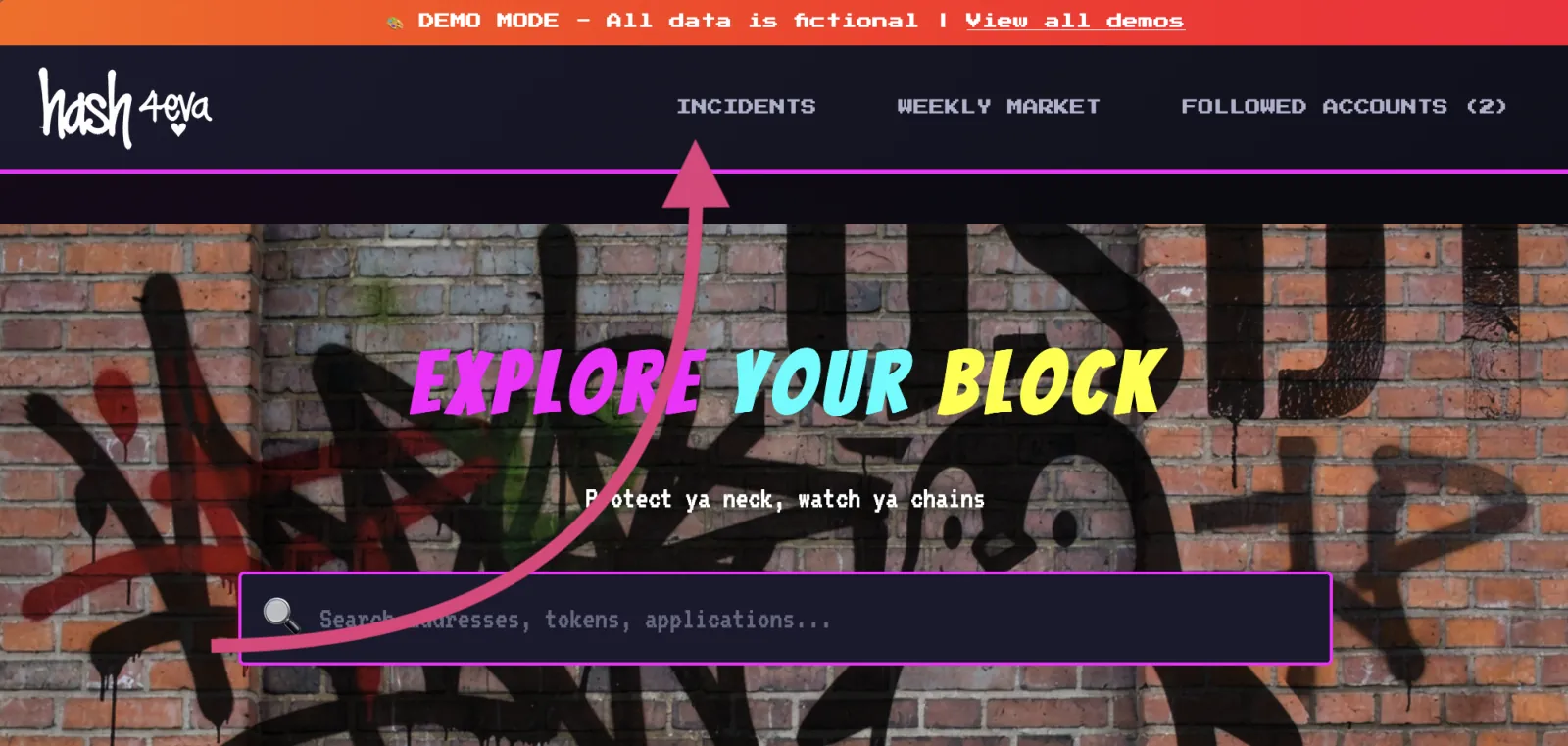
The homepage should reduce noise and focus on the things users actually care about. A good explorer should tell users what they recently viewed, highlight suspicious or important events, and make search feel effortless.
The demo homepage emphasizes a compact, high-signal experience. It gives users quick access to recent addresses, incident coverage, and a search experience that can route to accounts, contracts, and applications.
Account pages should become identity stories
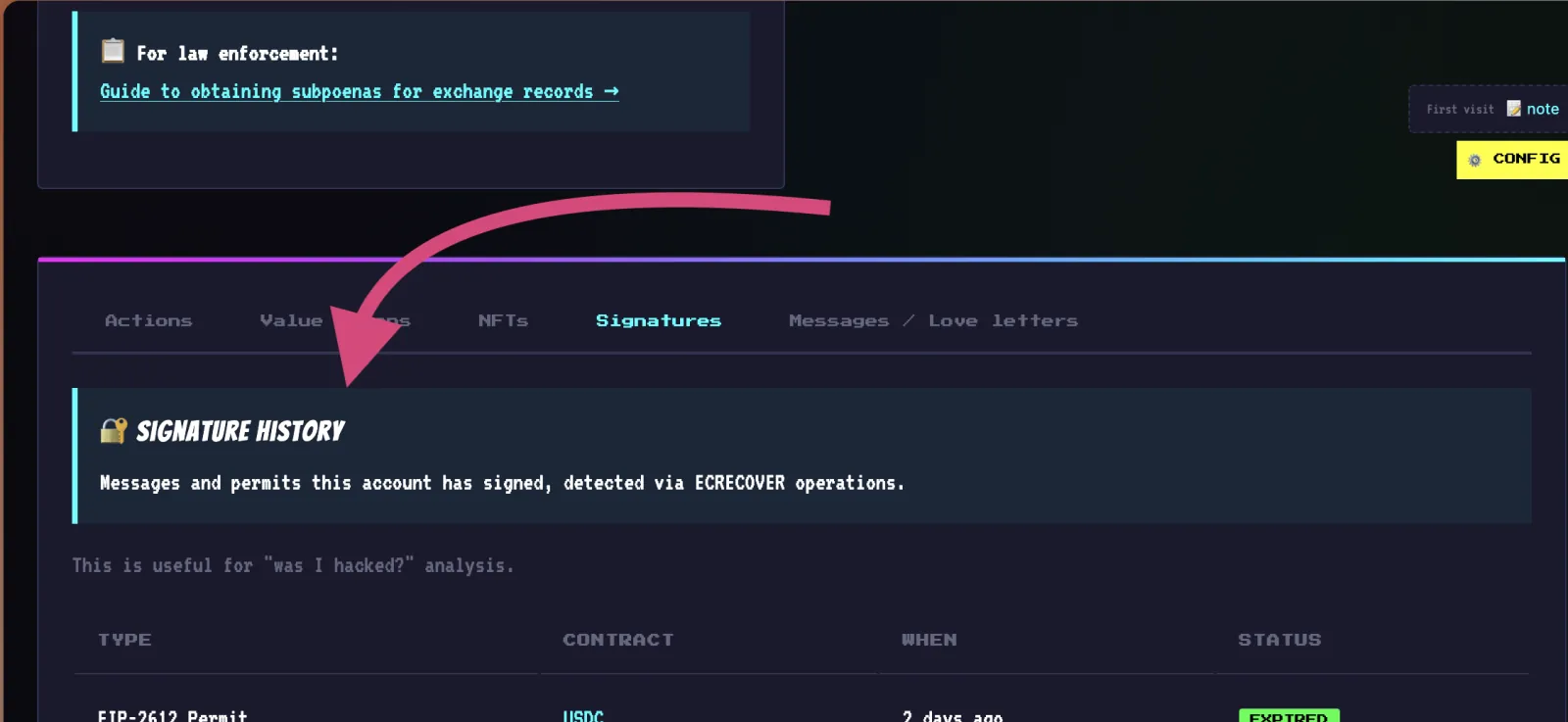
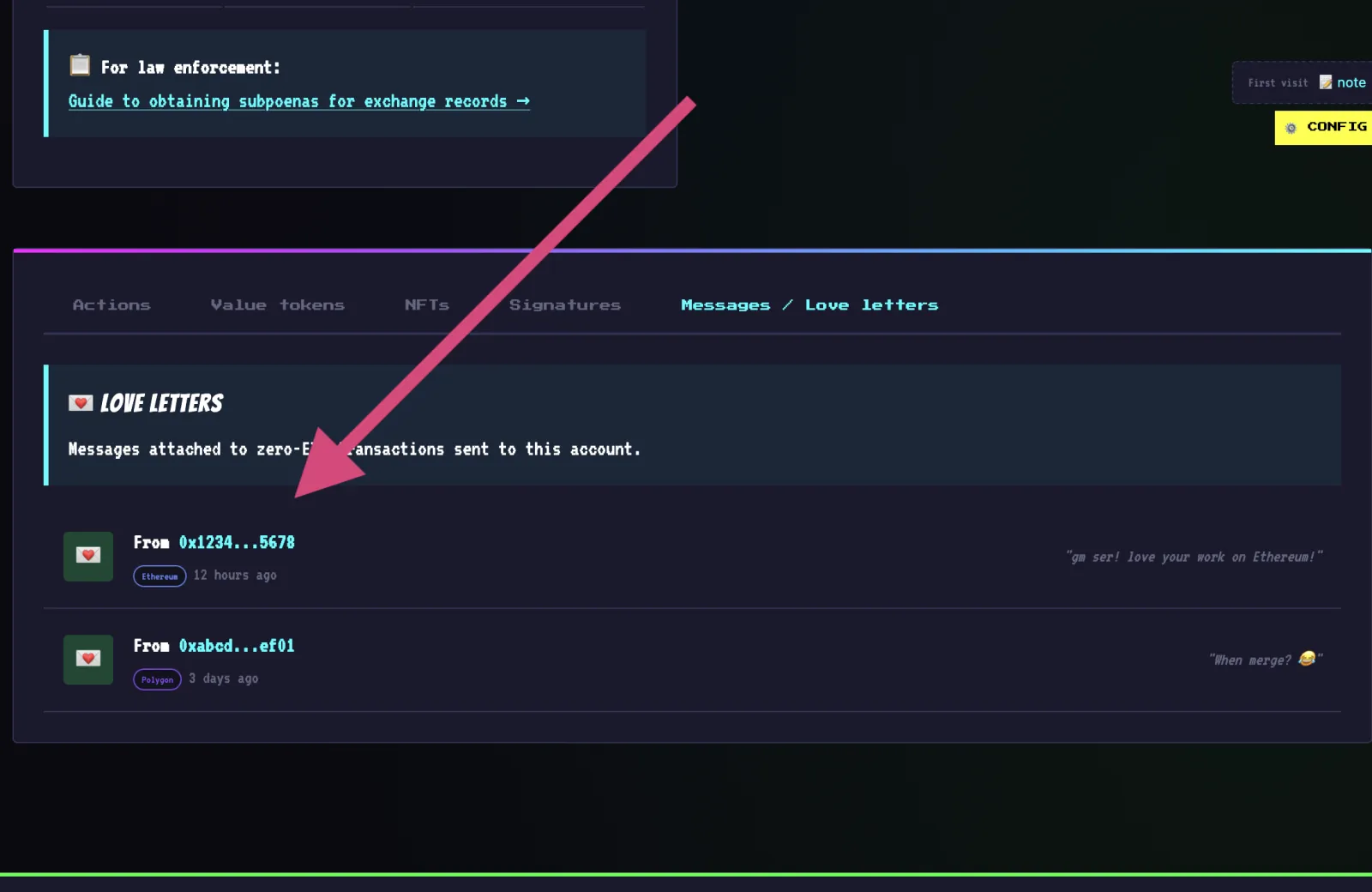
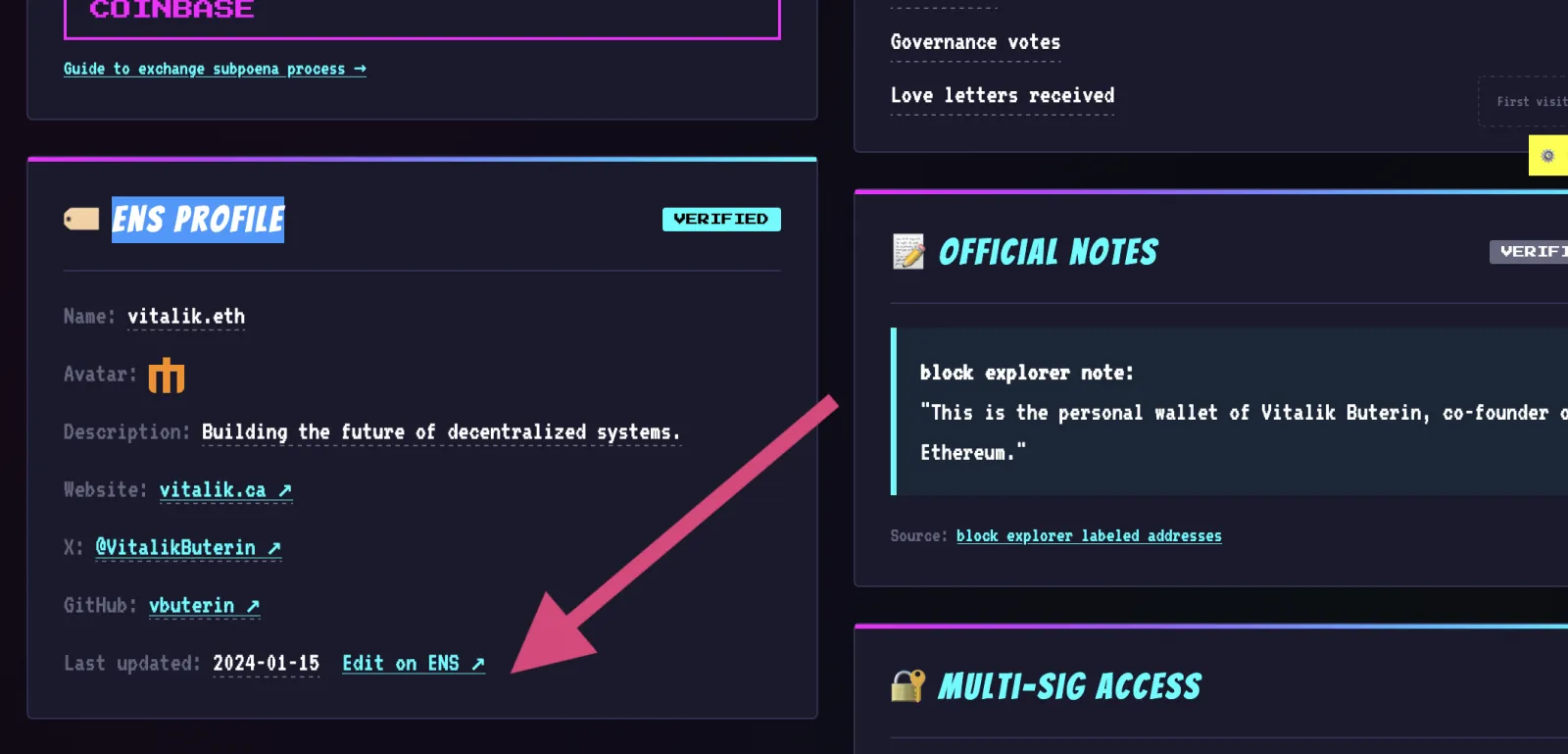
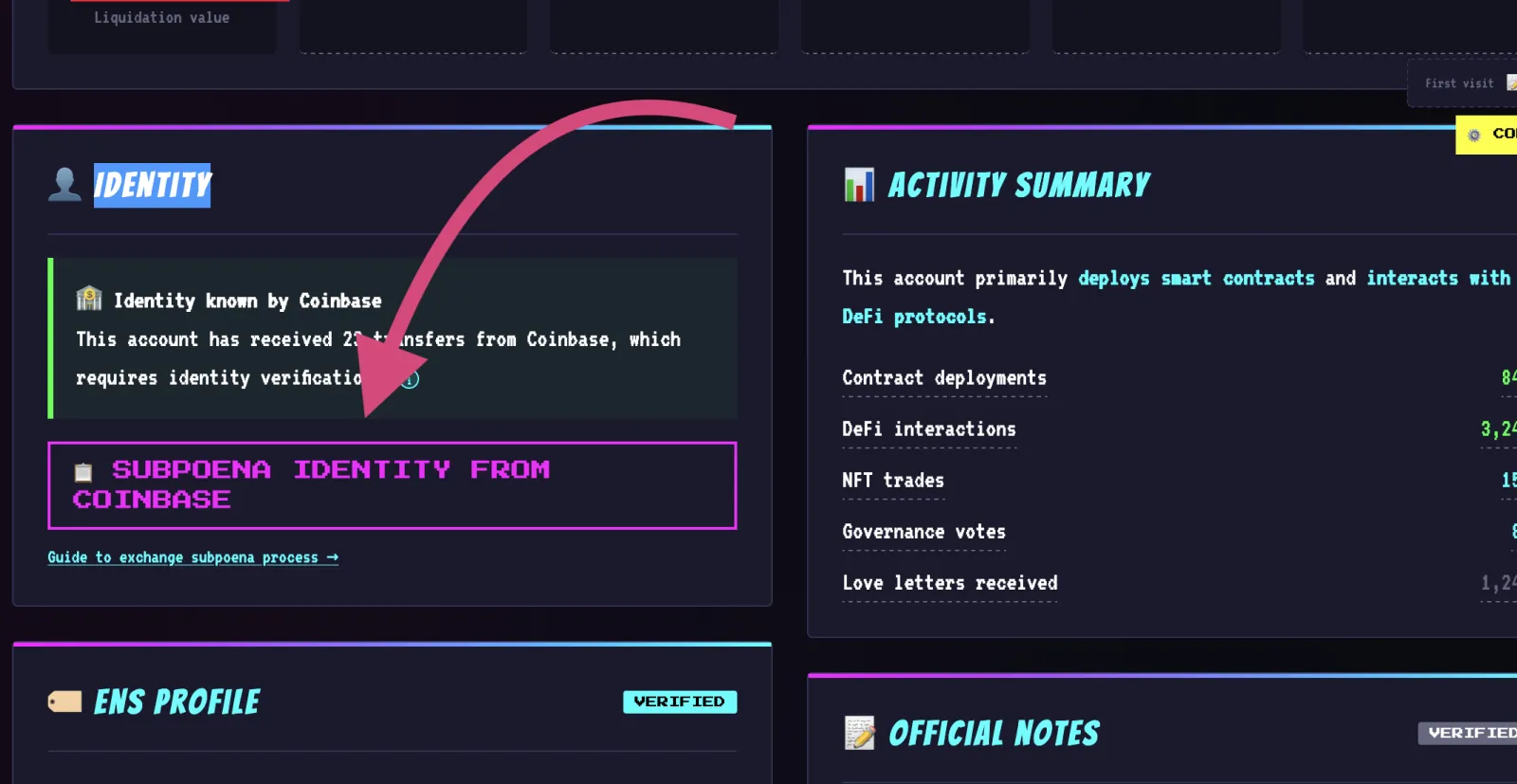
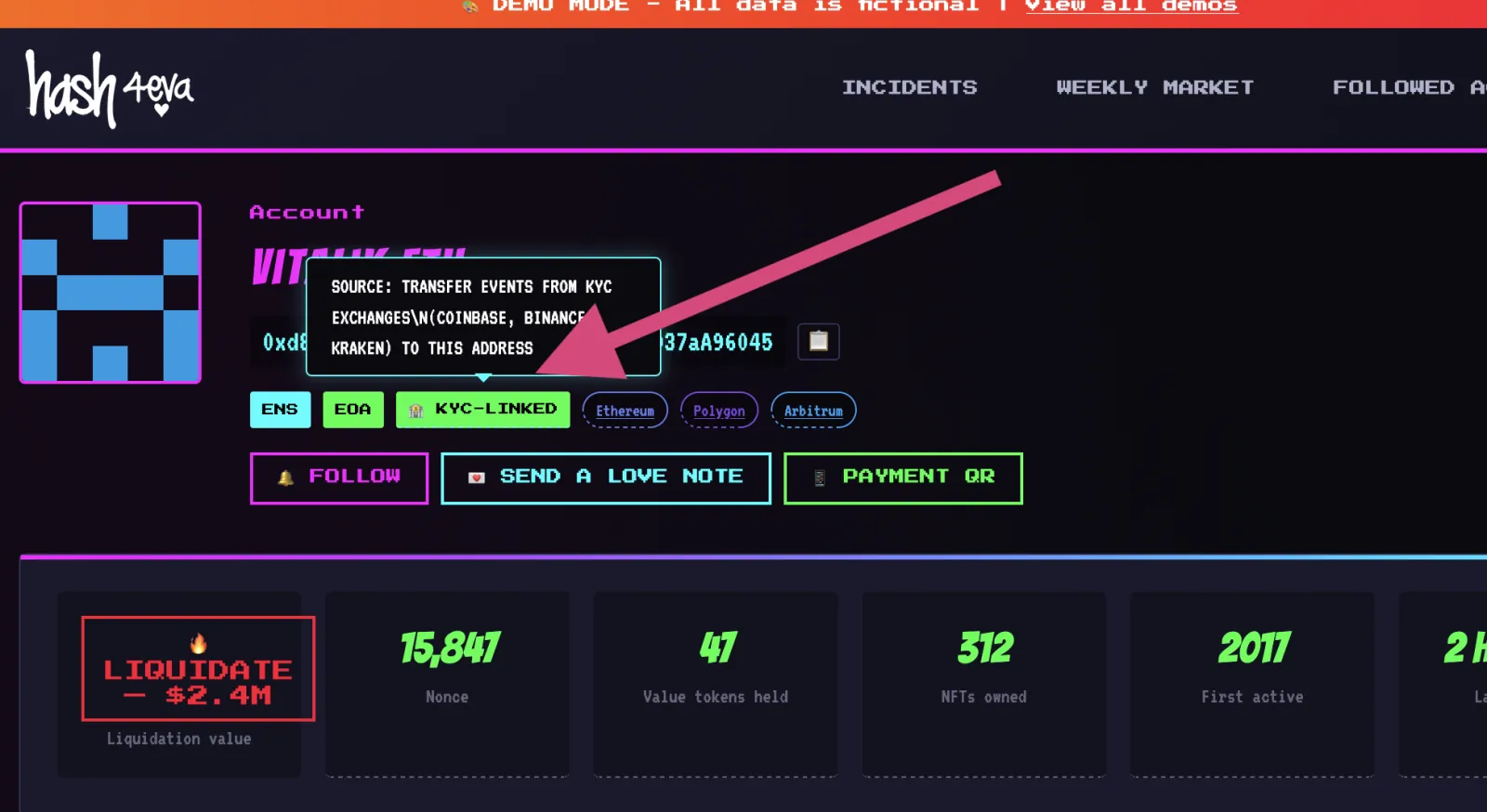
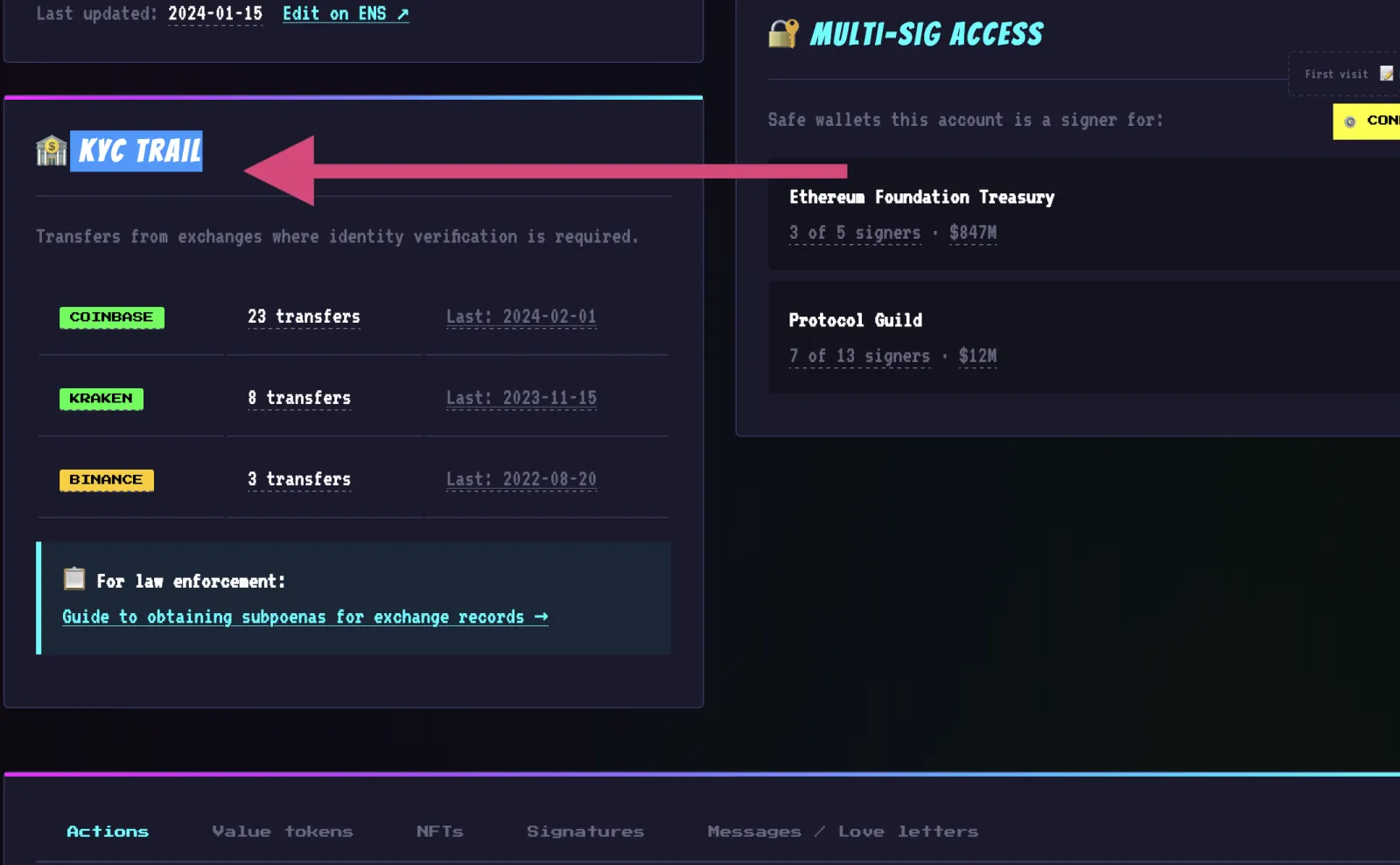
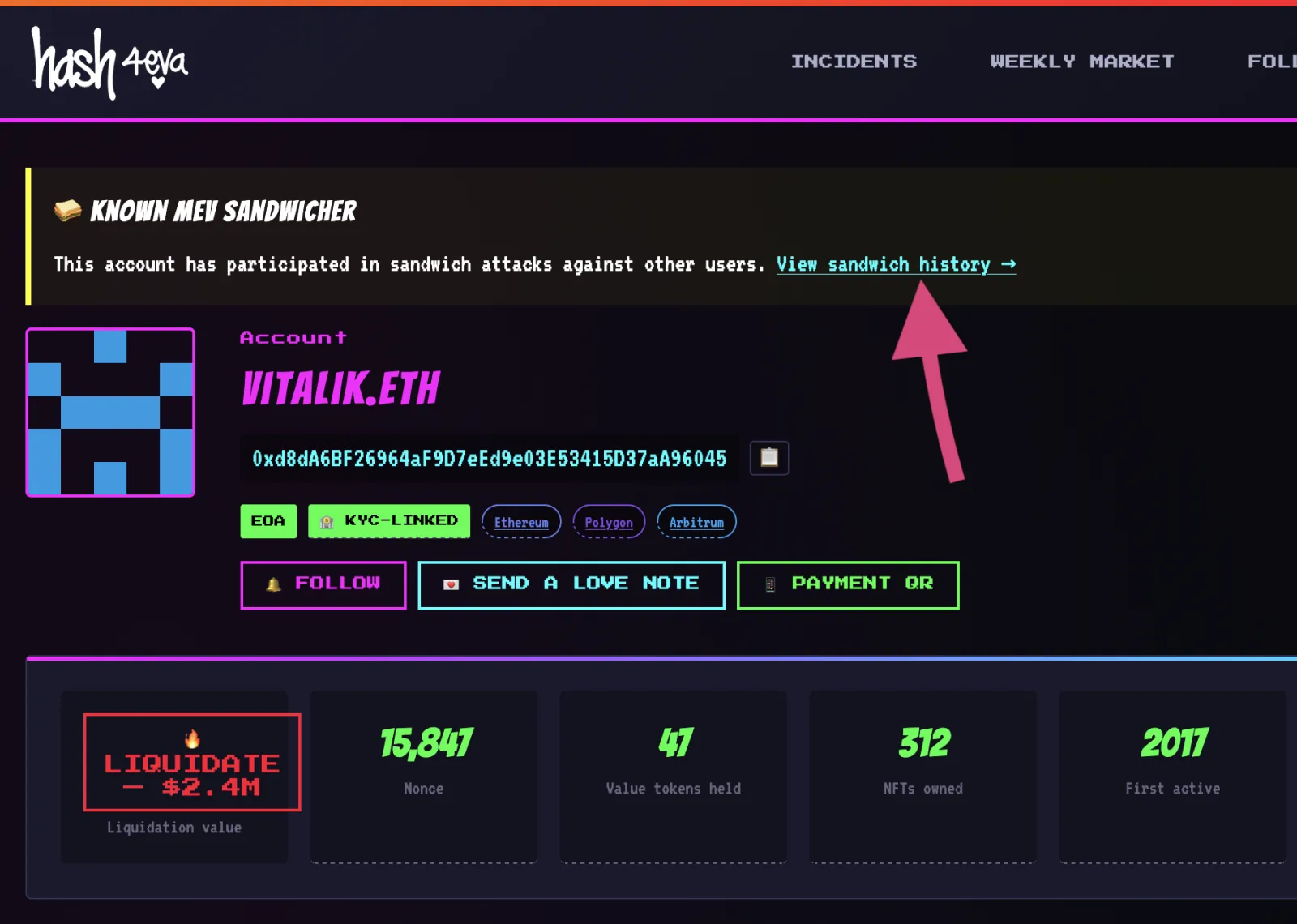
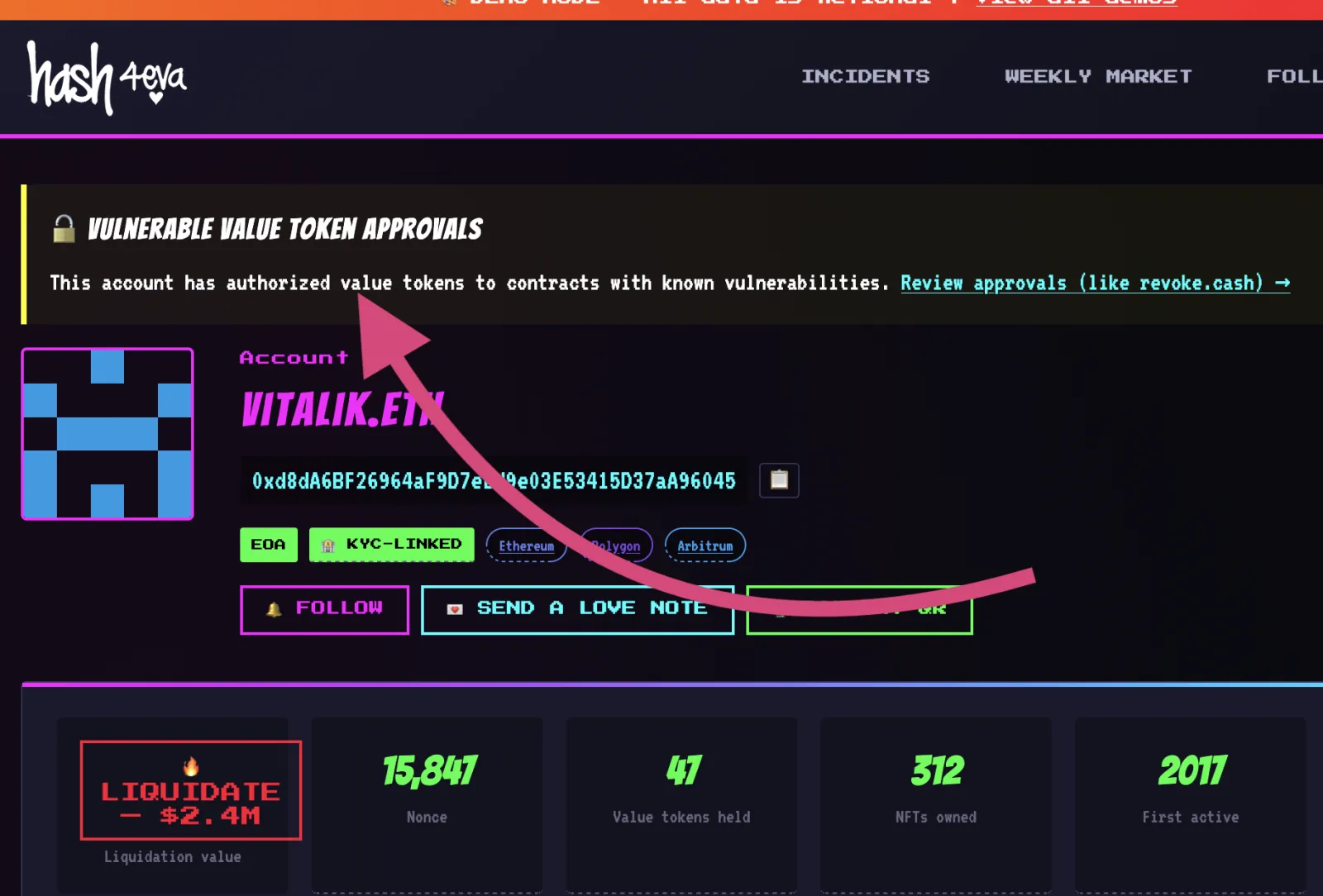
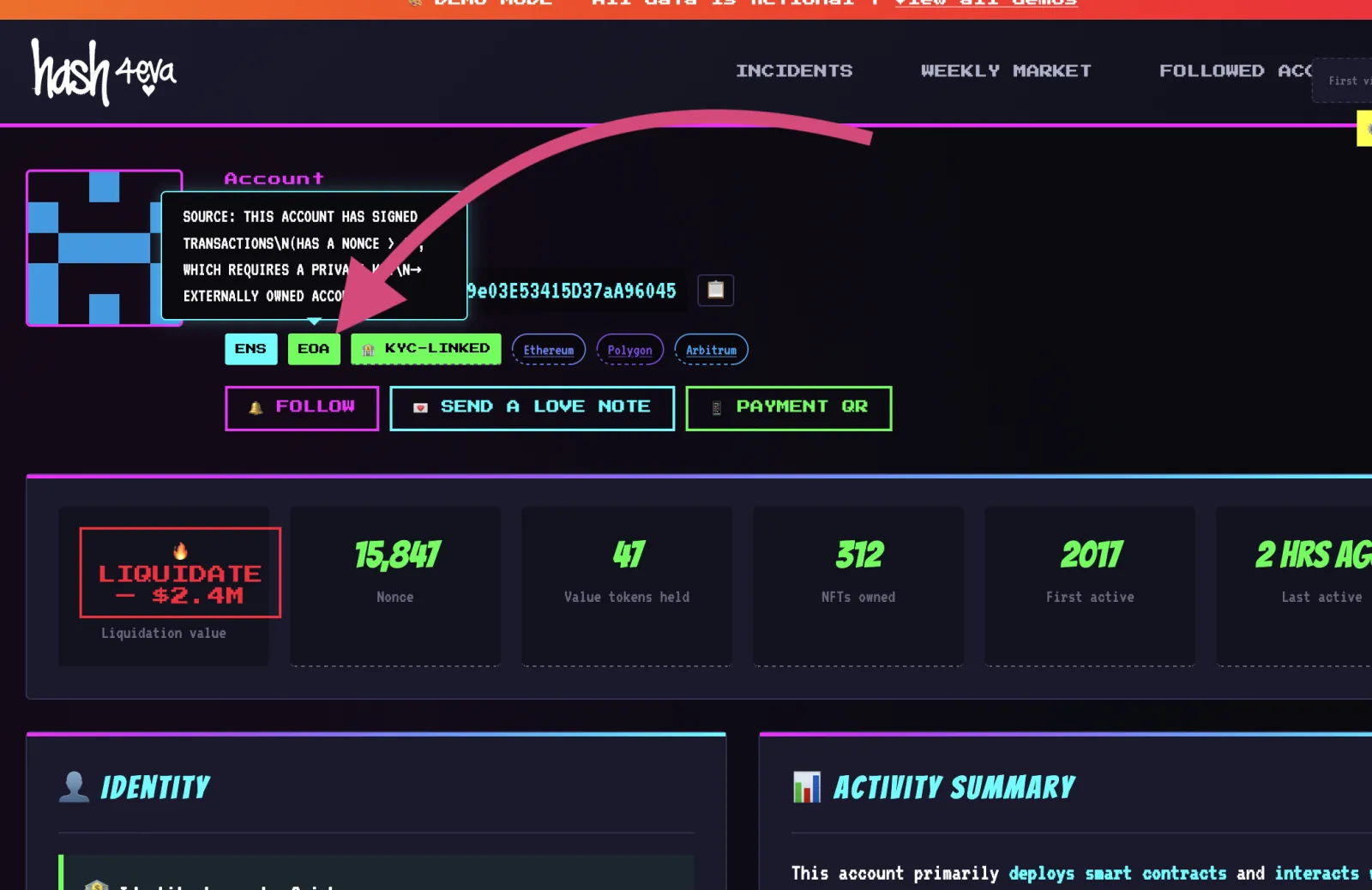
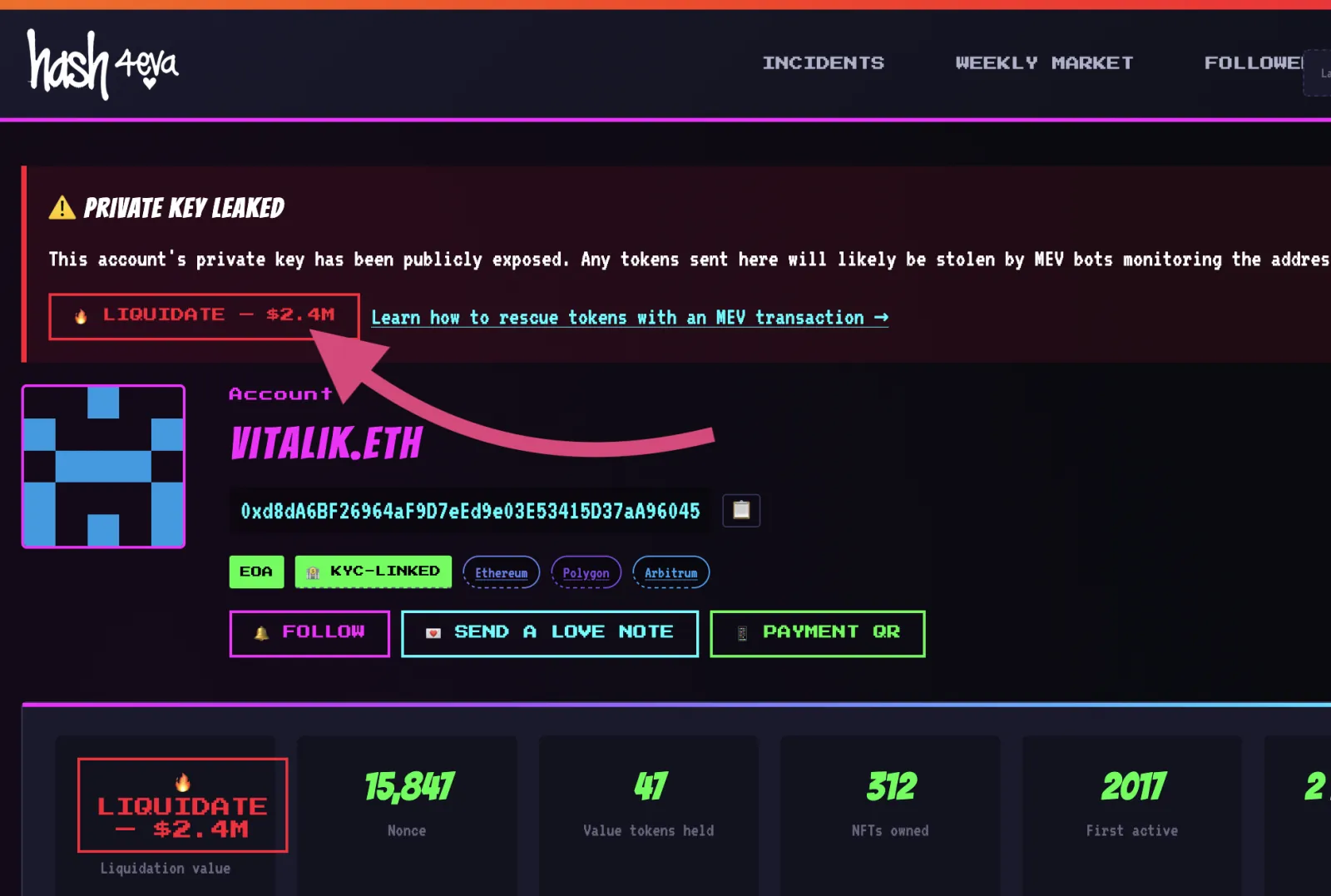
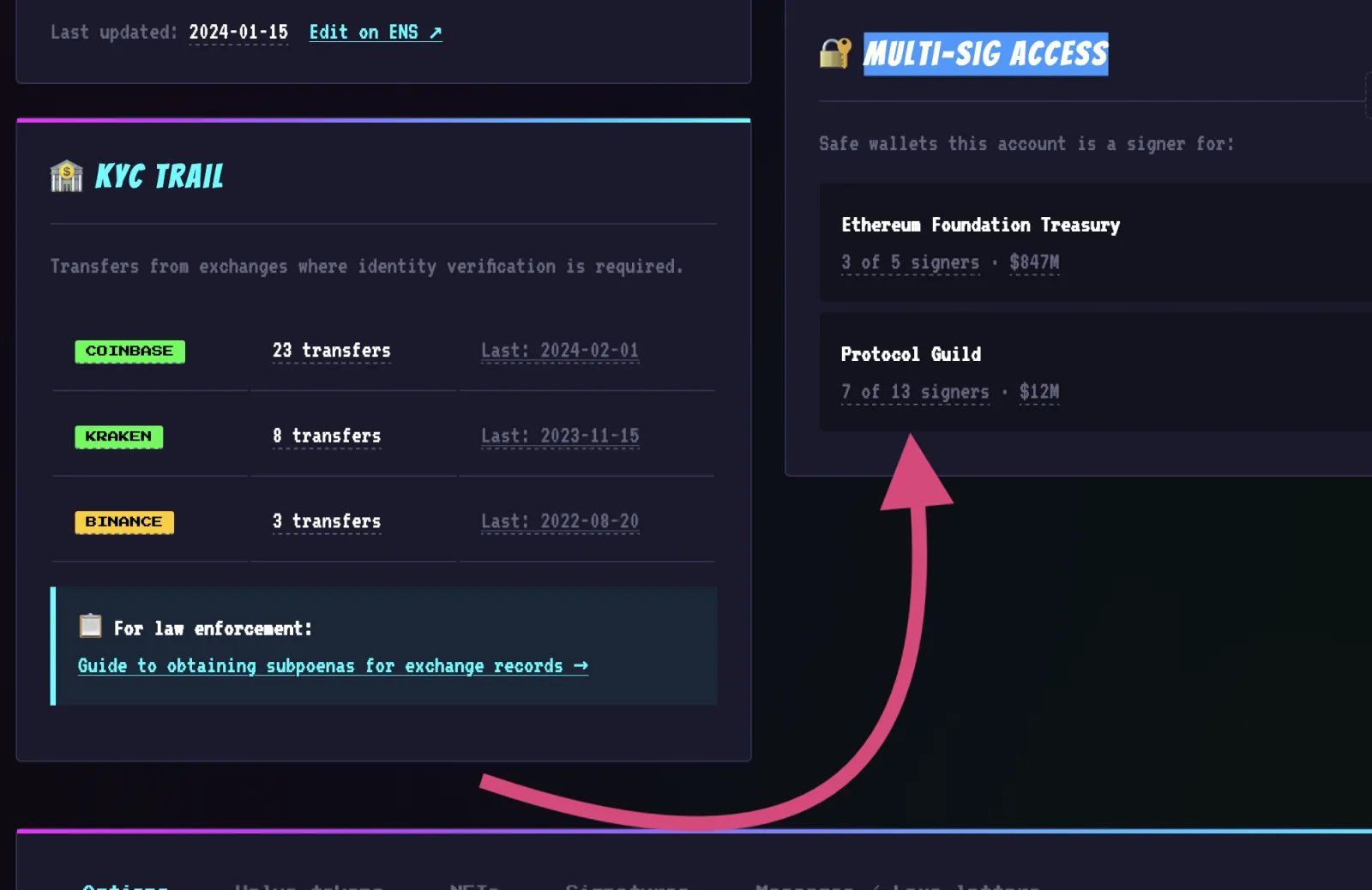
For an externally-owned account, the page should not behave like a raw transaction dump. It should function like a profile with context, evidence, and meaningful warnings.
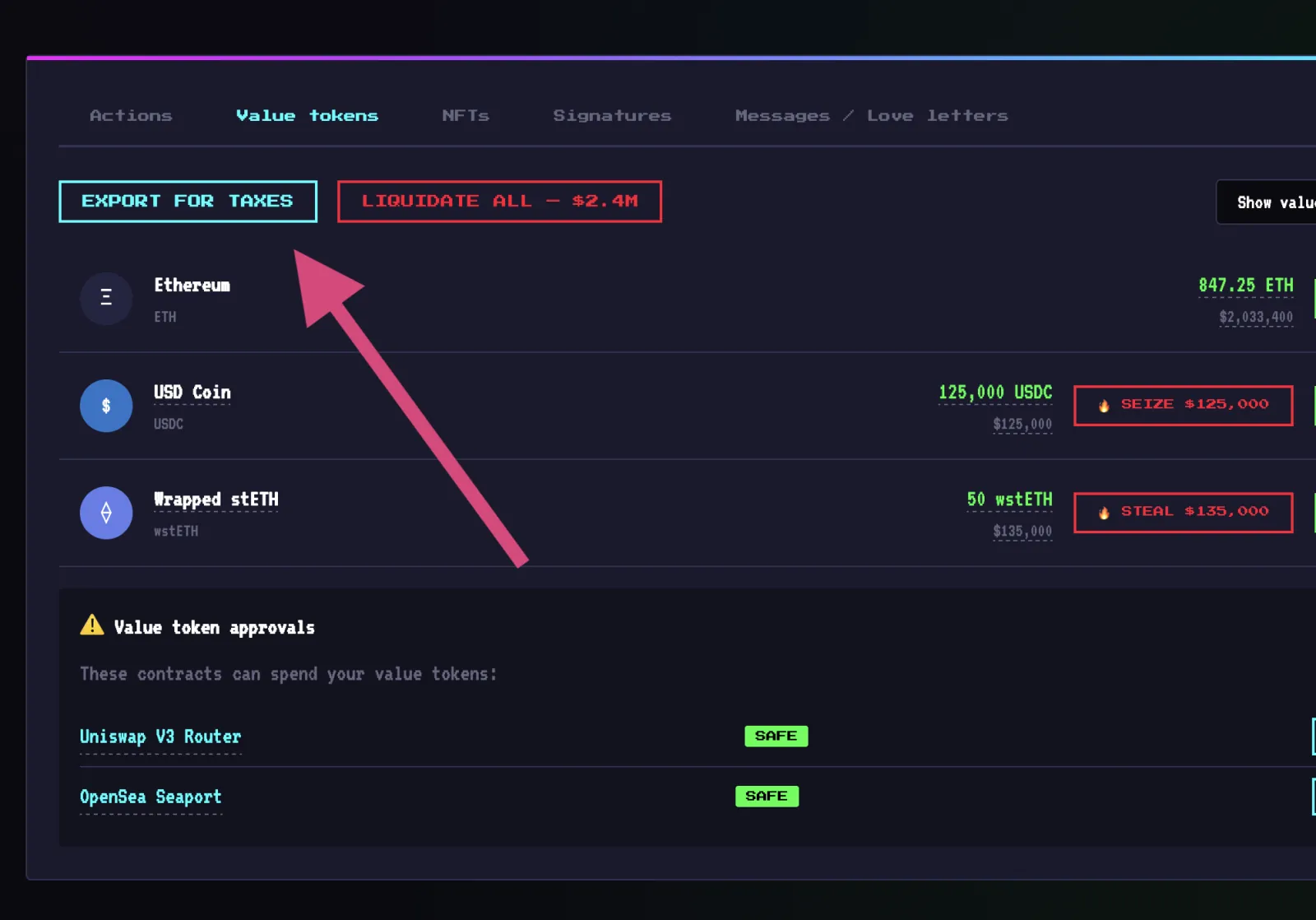
That means showing:
- account identity and ENS context
- KYC and exchange trail evidence
- whether the account has vulnerable approvals
- whether it has been involved in MEV-related behavior
- whether it has access to multisig or other administrative structures
- actions that can be taken to recover or investigate assets
The design goal is to transform an address into a story about who controls it, what it has done, and what is worth paying attention to.
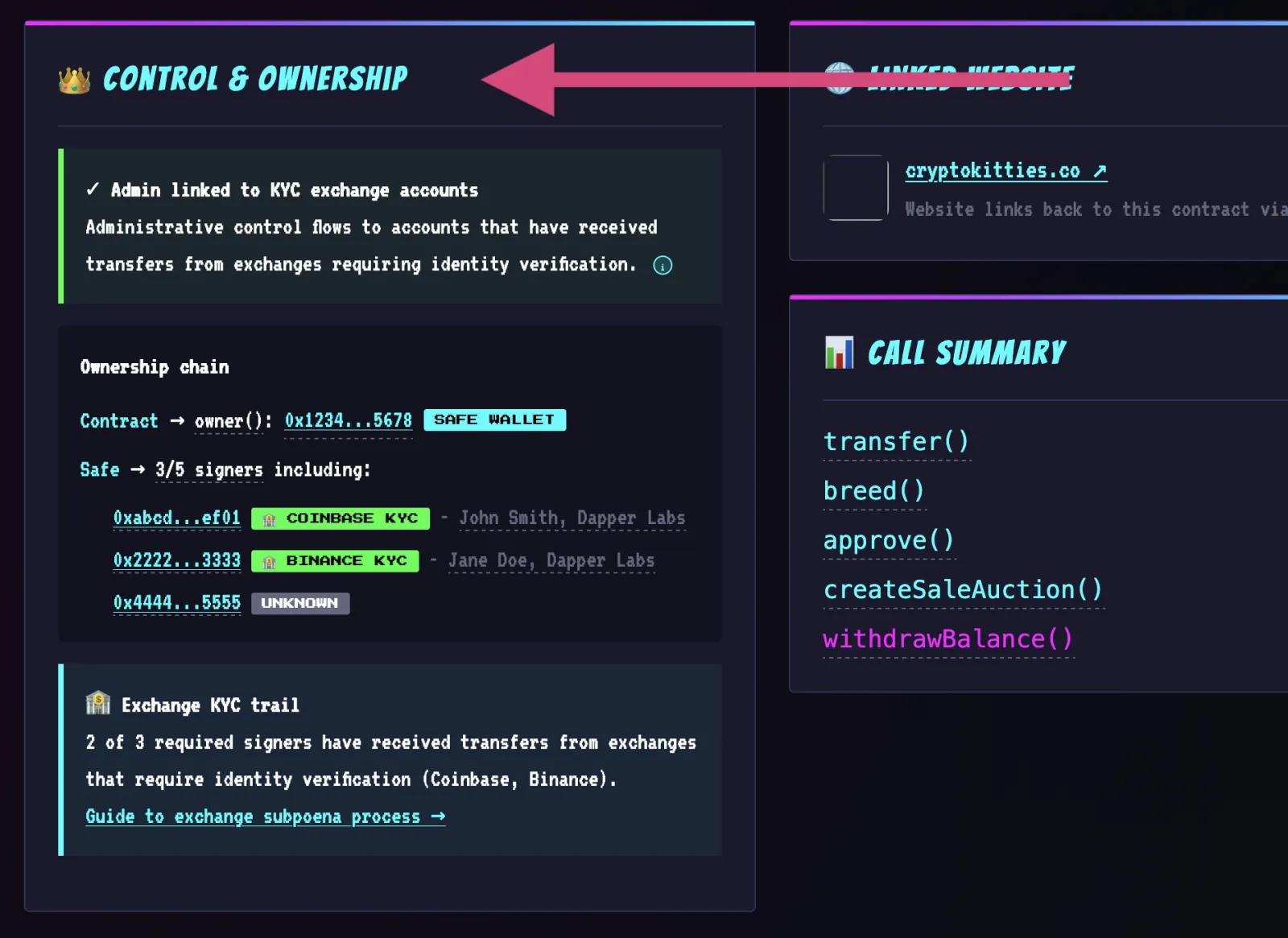
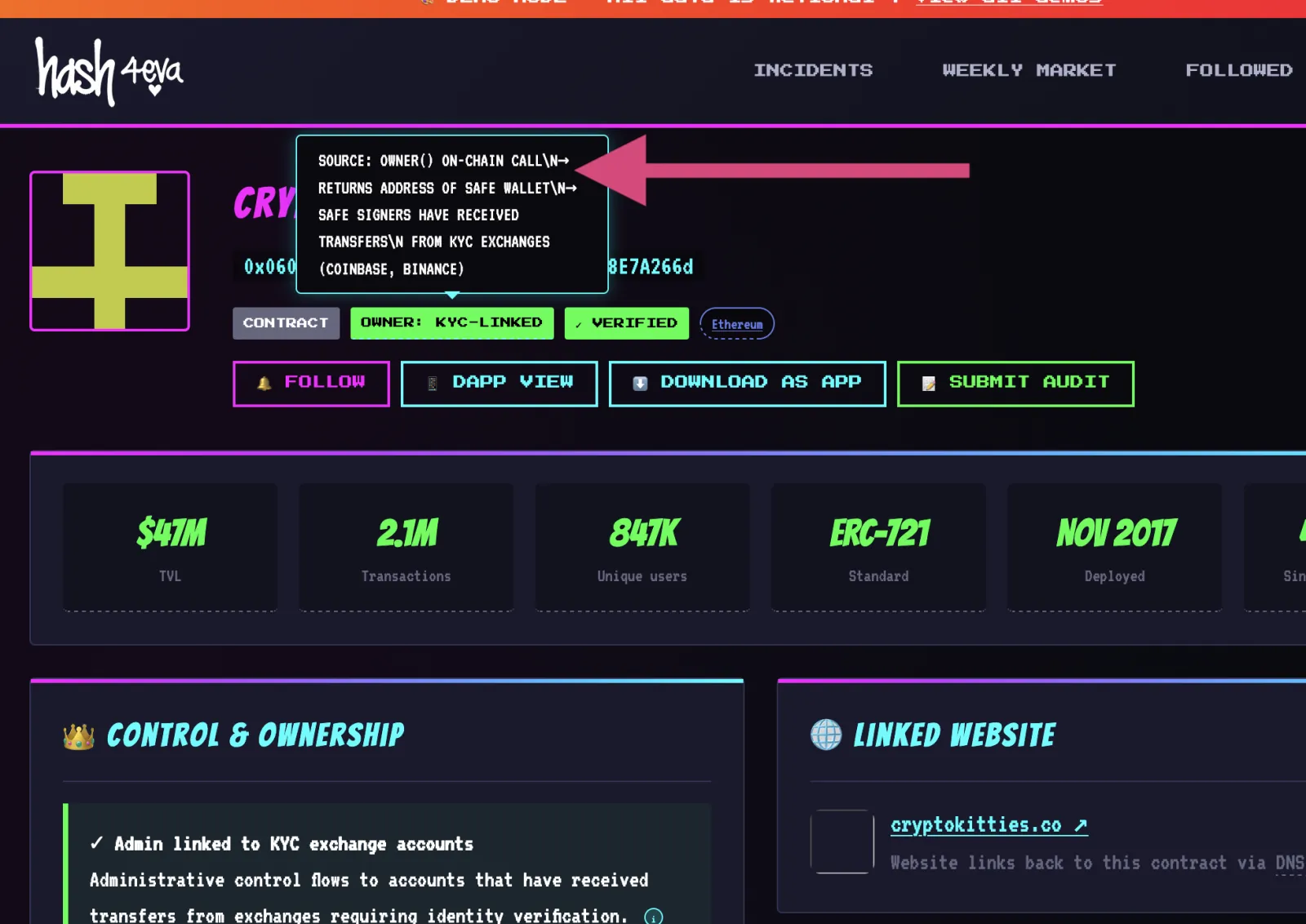
Contract pages should explain power and risk
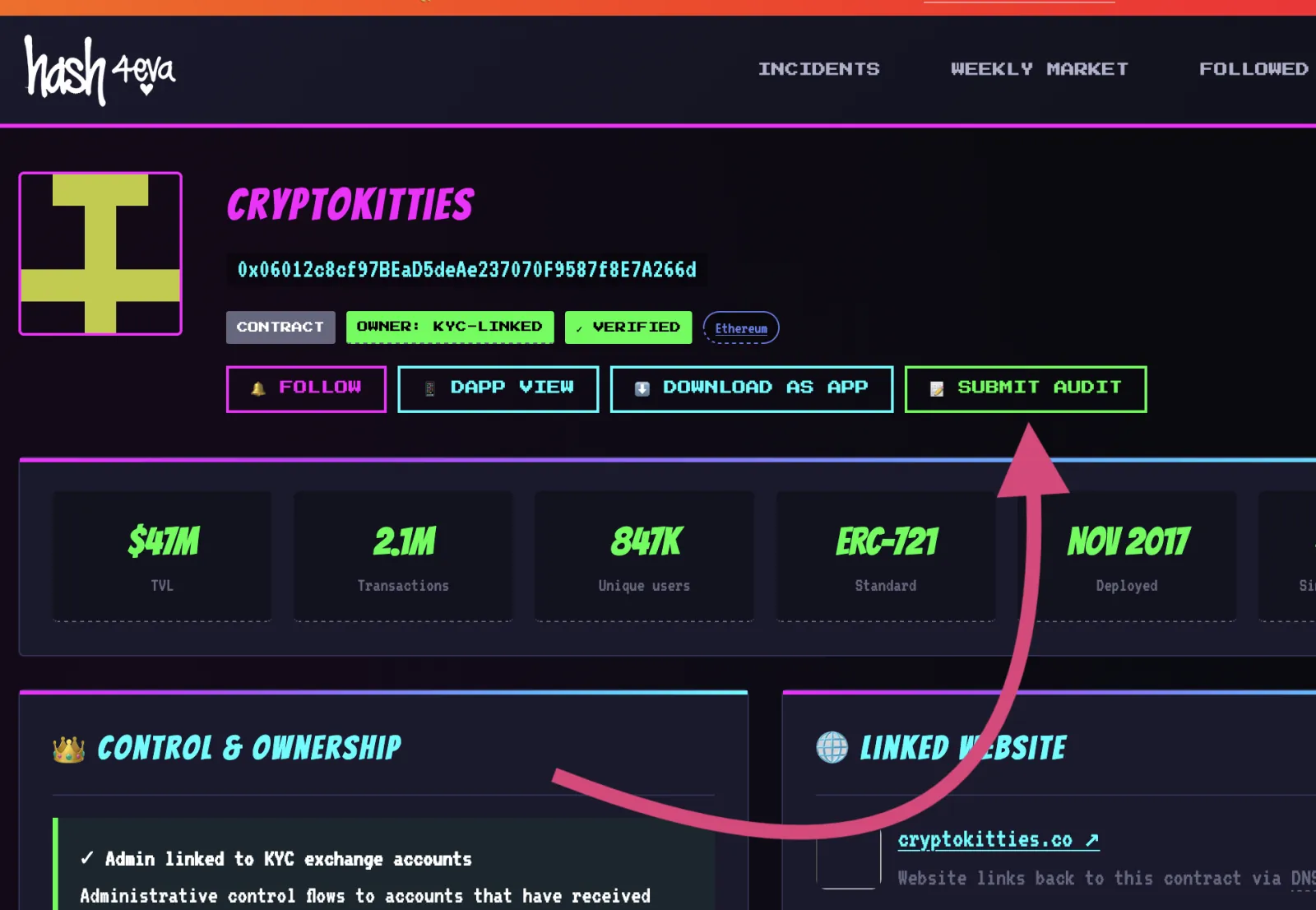
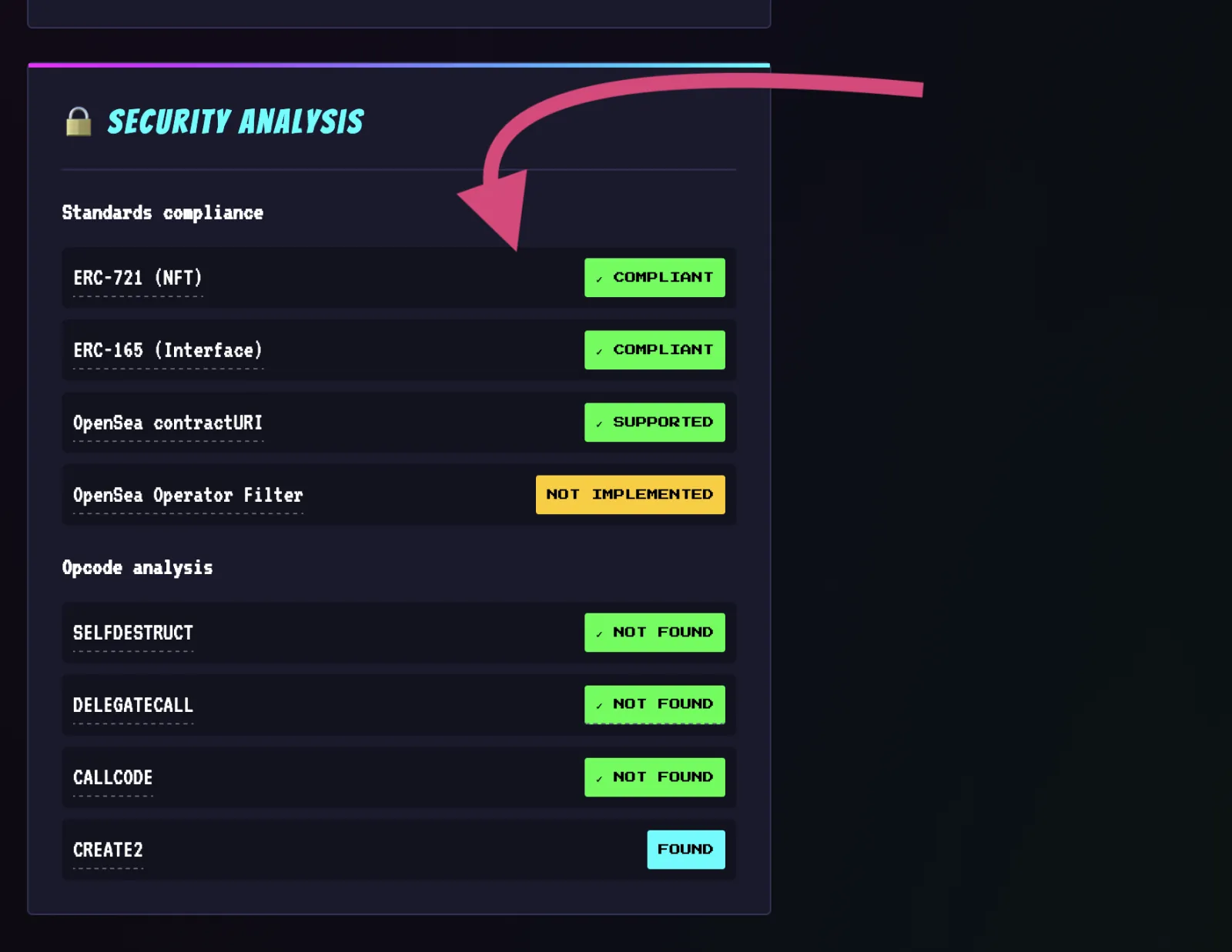
Smart contract pages need to do more than show bytecode. They should surface what the contract can do, who can control it, and what the likely risks are.
That means showing ownership structure, upgradeability, admin controls, audit status, and the mechanics of potential rug-pull or asset seizure conditions. The explorer should make these facts obvious.
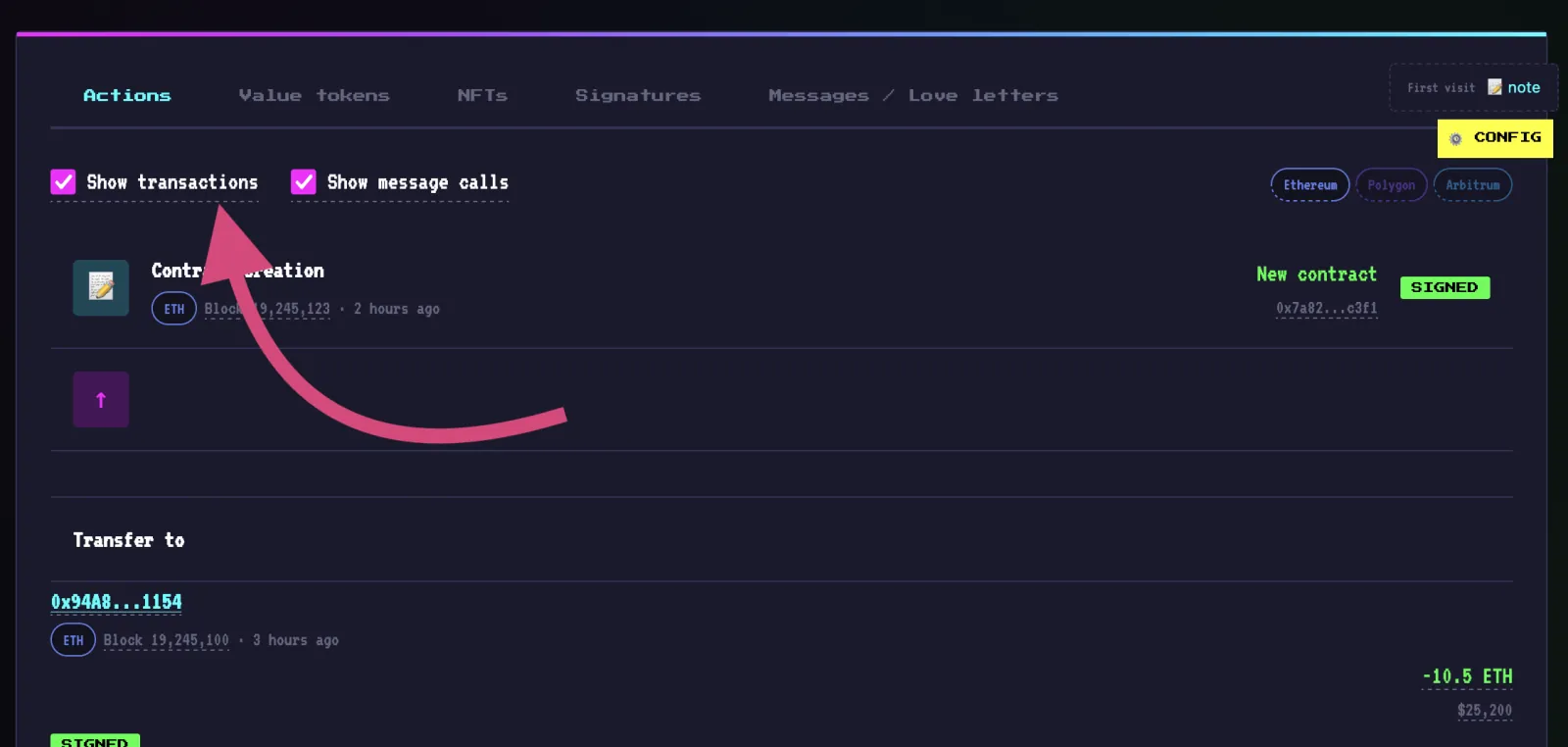
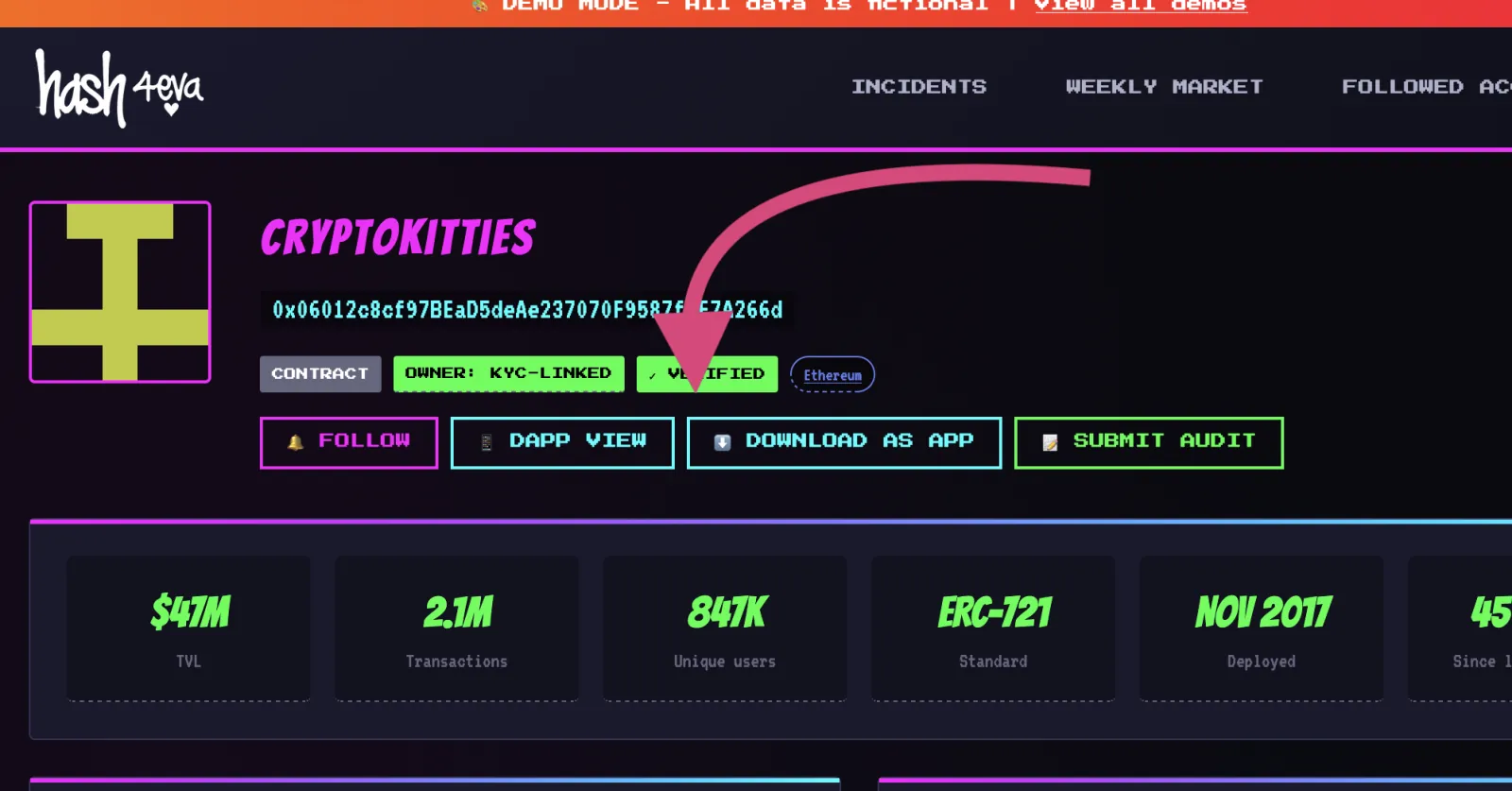
The demo contract page includes views for:
- ownership and administrative functions
- protocol conformance
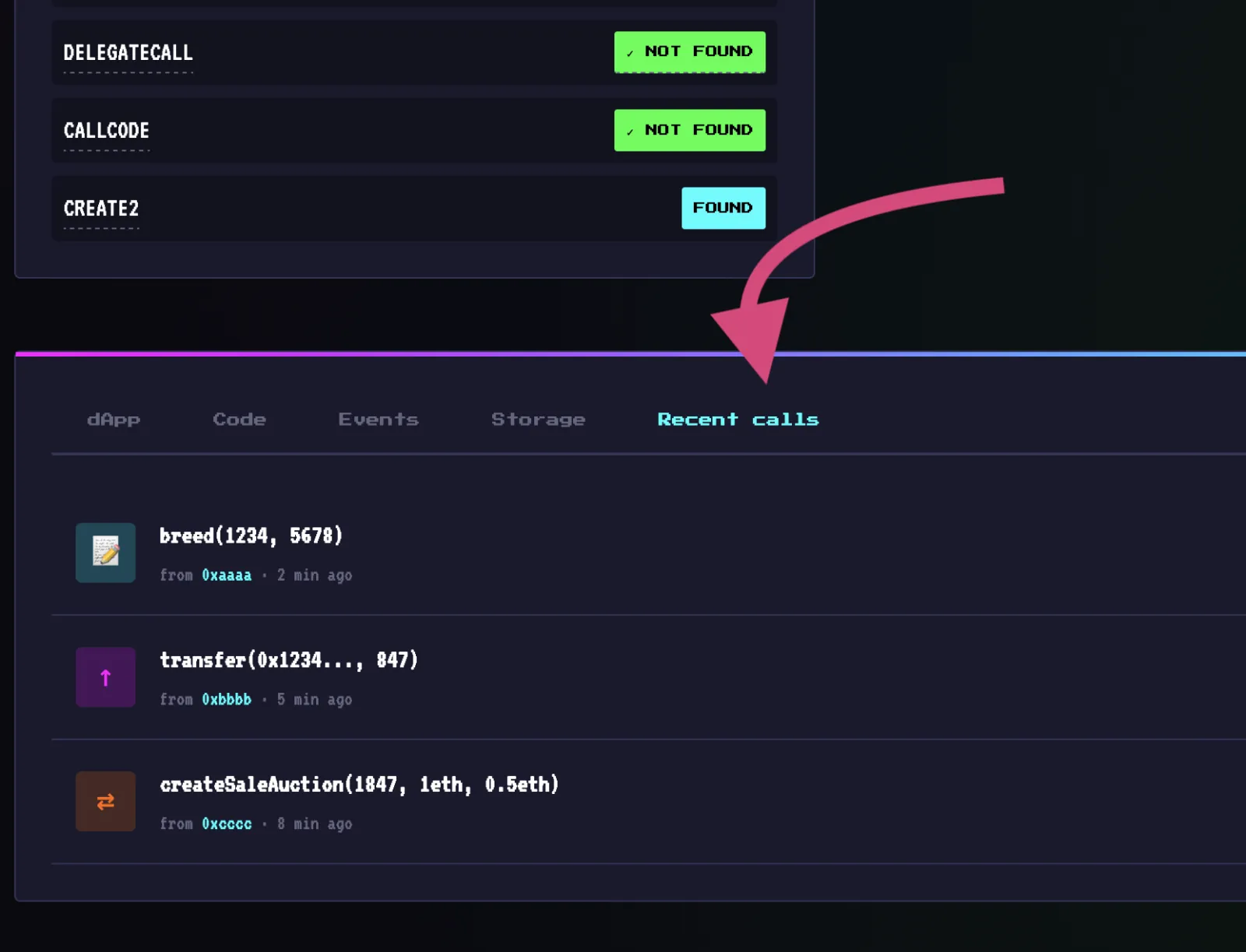
- actions and message calls
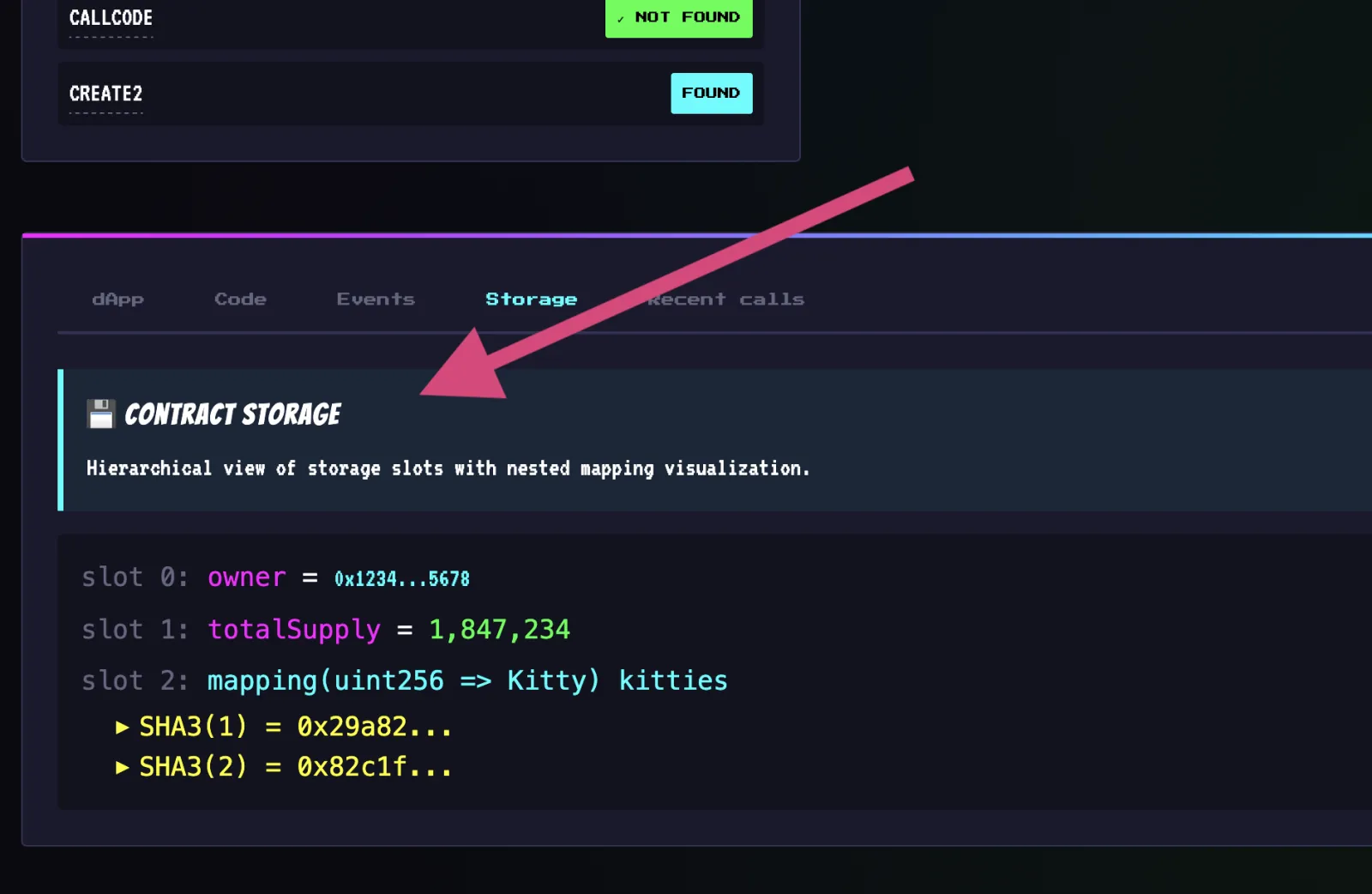
- storage layout and reverse-hash browsing
- audit submission and review workflows
- download and dapp-style export options
Transaction pages should explain impact
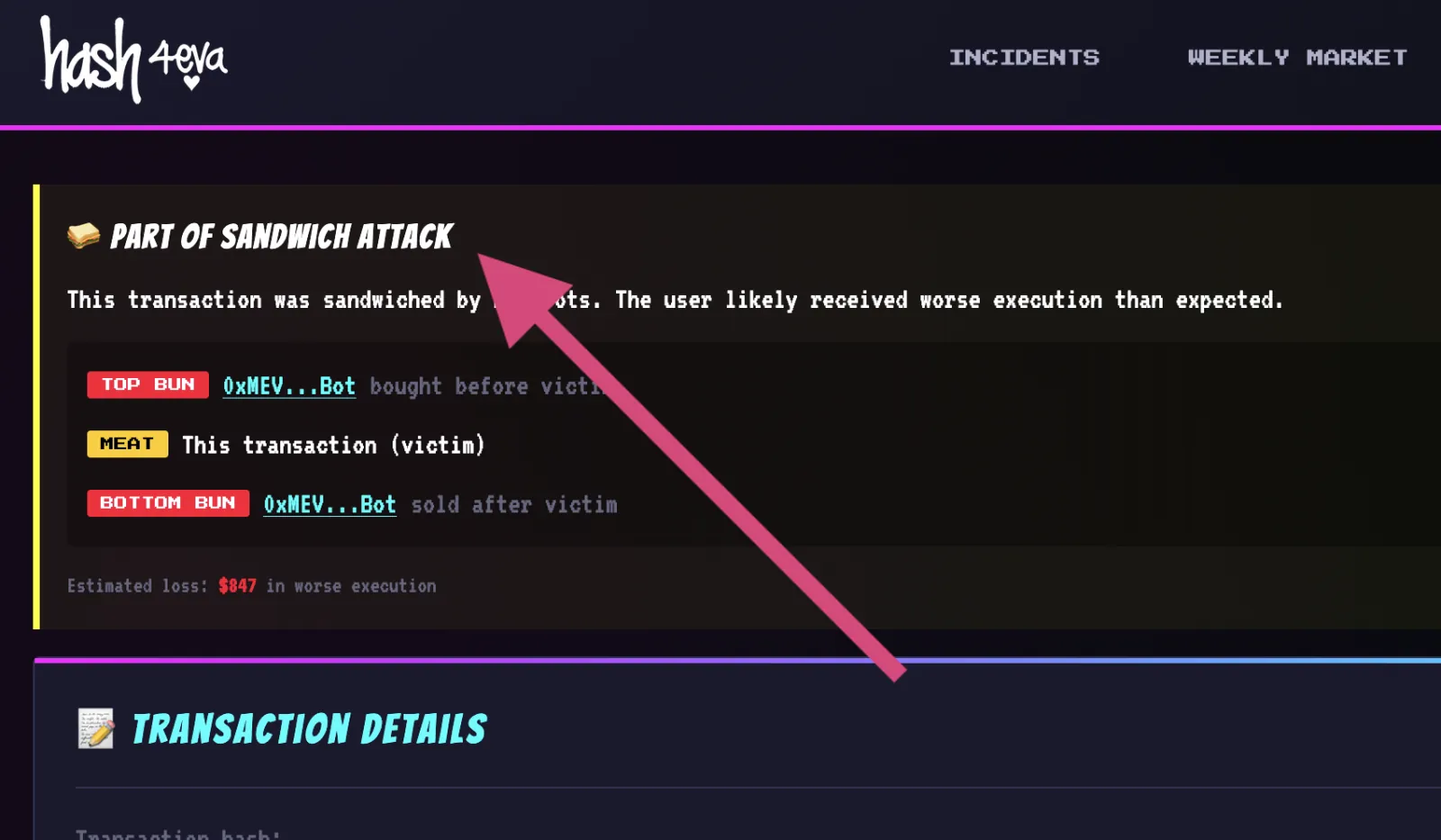
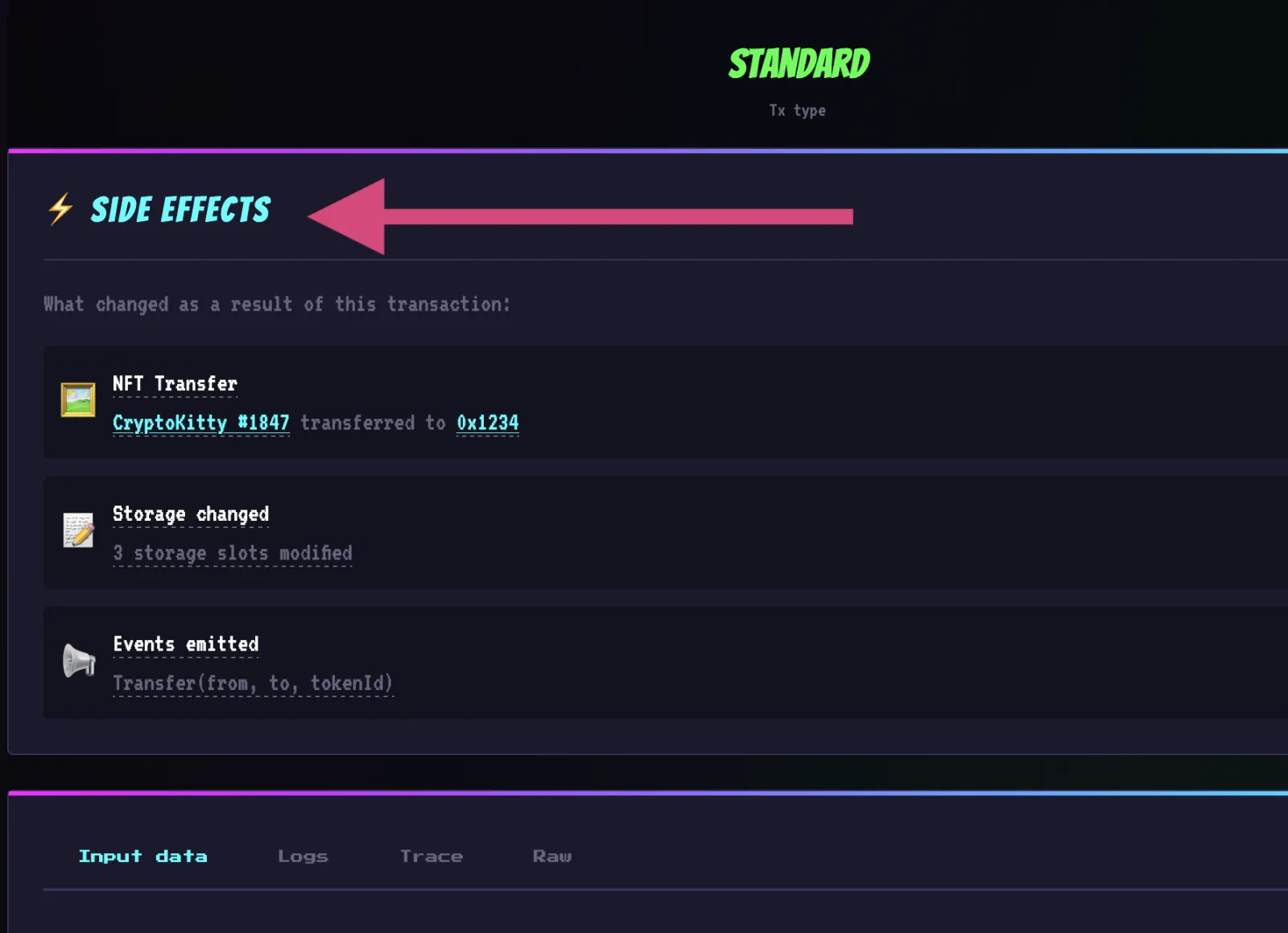
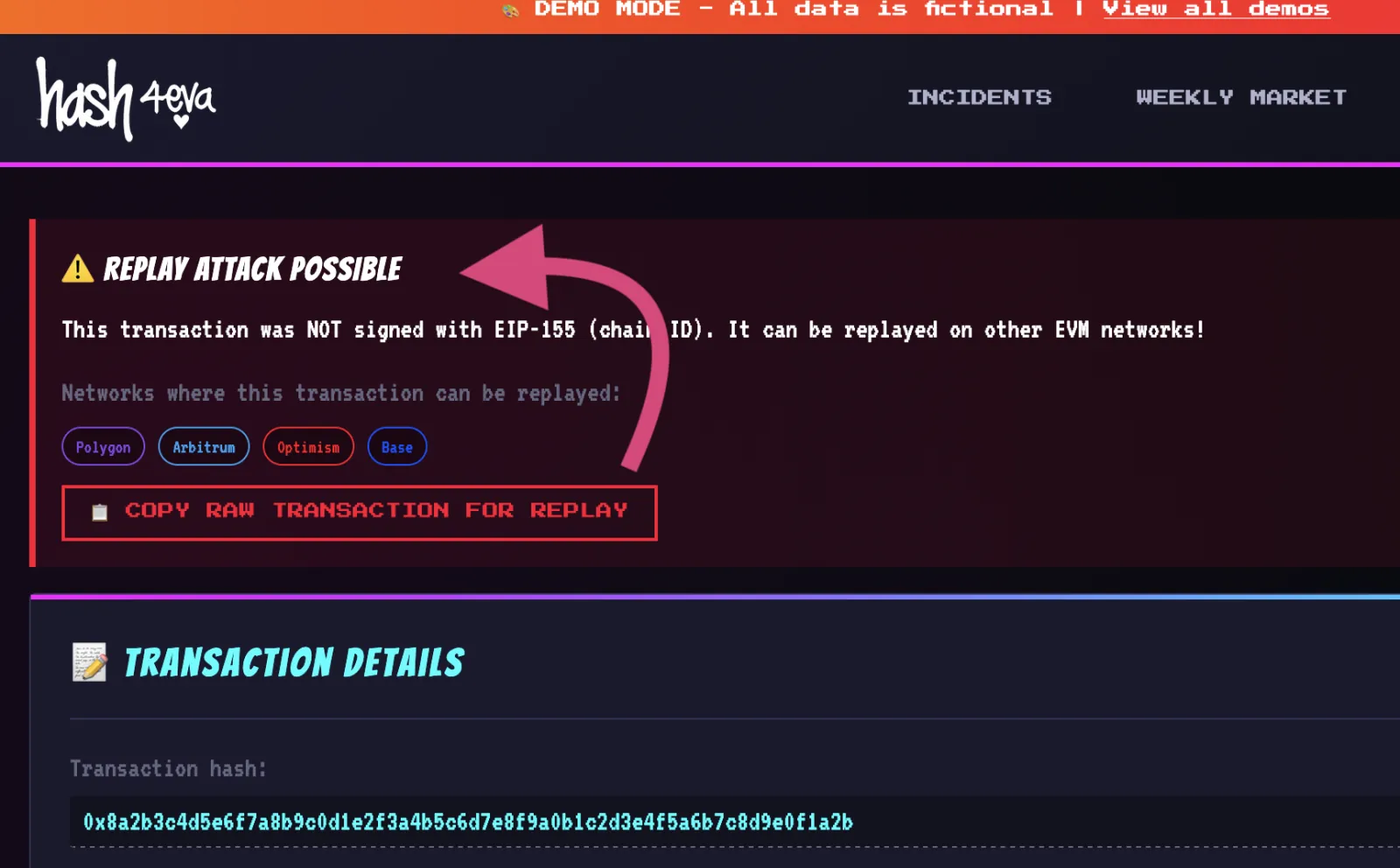
A transaction page should not just show a gas fee and a status marker. It should show what the transaction changed, who was affected, whether the transaction is replayable, and whether it looks suspicious or manipulative.
The design should make the user feel that the transaction is legible. That means surfacing side effects, value movement, storage changes, and event logs in a single, understandable view.
Security audits and liquidate buttons
Anybody should be welcome to upload evidence of backdoors, rugpulls and other security issues.
Here is one example, OpenSea administrators can take any tokens minted on the OpenSea Shared Storefront.
This actual liquidate button should be shown directly on the contract page. If the administator of OpenSea sees that button, they should be able to click it to do the rugpull. If anybody else sees it, they should be able to simulate the same transaction and see the impact.
There’s a big difference between “XYZ company audited our smart contract (the old version) (4 years ago)” and “click here to rugpull this contract.” And luckly, it is very easy to validate claims of rugpulls. We should support these researchers and bring their findings front and center.
Incidents should become structured stories
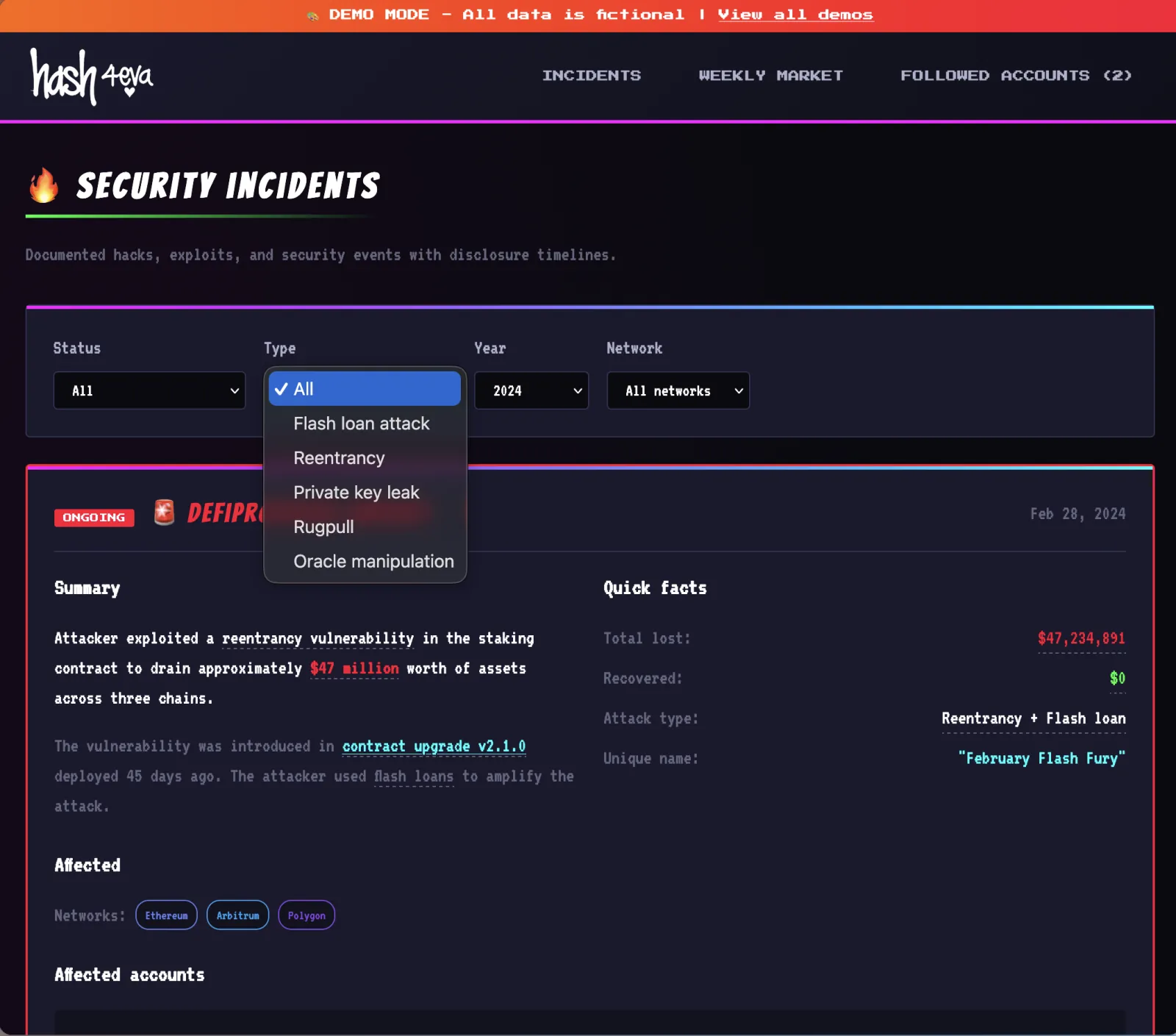
Incidents are a strong use case for an explorer because they naturally combine addresses, contracts, timelines, and consequences. The explorer should make it obvious what happened, when it happened, who was affected, and what the follow-up actions should be.
The demo incidents page shows a more narrative, timeline-driven approach to presenting security events instead of burying them in a feed.
The takeaway
The important lesson is that blockchain applications need better interfaces before they can become broadly trustworthy. The explorer is the obvious front door. If the explorer is clear, evidence-driven, and action-oriented, users will have a better chance of understanding the system and making safe decisions.
Hash4eva is a design attempt to make that possible. It is not just a prettier version of Etherscan. It is a rethinking of the explorer as a system for trust, explanation, and action.
▧
Comments
There are no comments yet.
Please discuss this topic anywhere and let me know any great comments or media coverage I should link here.