Apple, Inc. has built the largest private infrastructure project in human history. They use it to deny competition across multiple valuable markets.
The largest infrastructure project in human history
With over 2.5 billion active devices from an estimated USD 2.5 trillion in customer investment, Apple’s products are the single largest infrastructure project in human history.
This surpasses every other great infrastructure project in human history controlled by a single organization:
- The Chinese Belt and Road Initiative with USD 1.4 trillion in investment.
- The Chinese high-speed rail network with USD 1 trillion in investment.
- The US Interstate Highway System with USD 700 billion in investment [2026 dollars].
Here is a very brief size-up to illustrate.
Apple announced in 2026 that it had exceeded an installed base of 2.5 billion active devices. And Apple products have an average selling price about USD 1,000. So that is at least USD 2.5 trillion in investment.
That is one third of earth’s human population. And the amount of time per day each person uses with these devices is obscene. I’m sure you know it, but I don’t have a reliable number to cite across earth.
This is infrastructure because it is the basis of commerce and leisure which other people can use directly or build on (with apps). And it is a single project because Apple, Inc. controls the entire thing. (Unlike “the internet” which is actually multiple separate infrastructure projects controlled by many entities.)
But here’s the real story: Apple uses this unprecedented infrastructure position to systematically deny competition across multiple high-value markets.
iCloud: the default trap
When you first setup you iPhone, iCloud is enabled by default.
More importantly, iCloud is stored in a way that by default Apple has access to every photo you take.
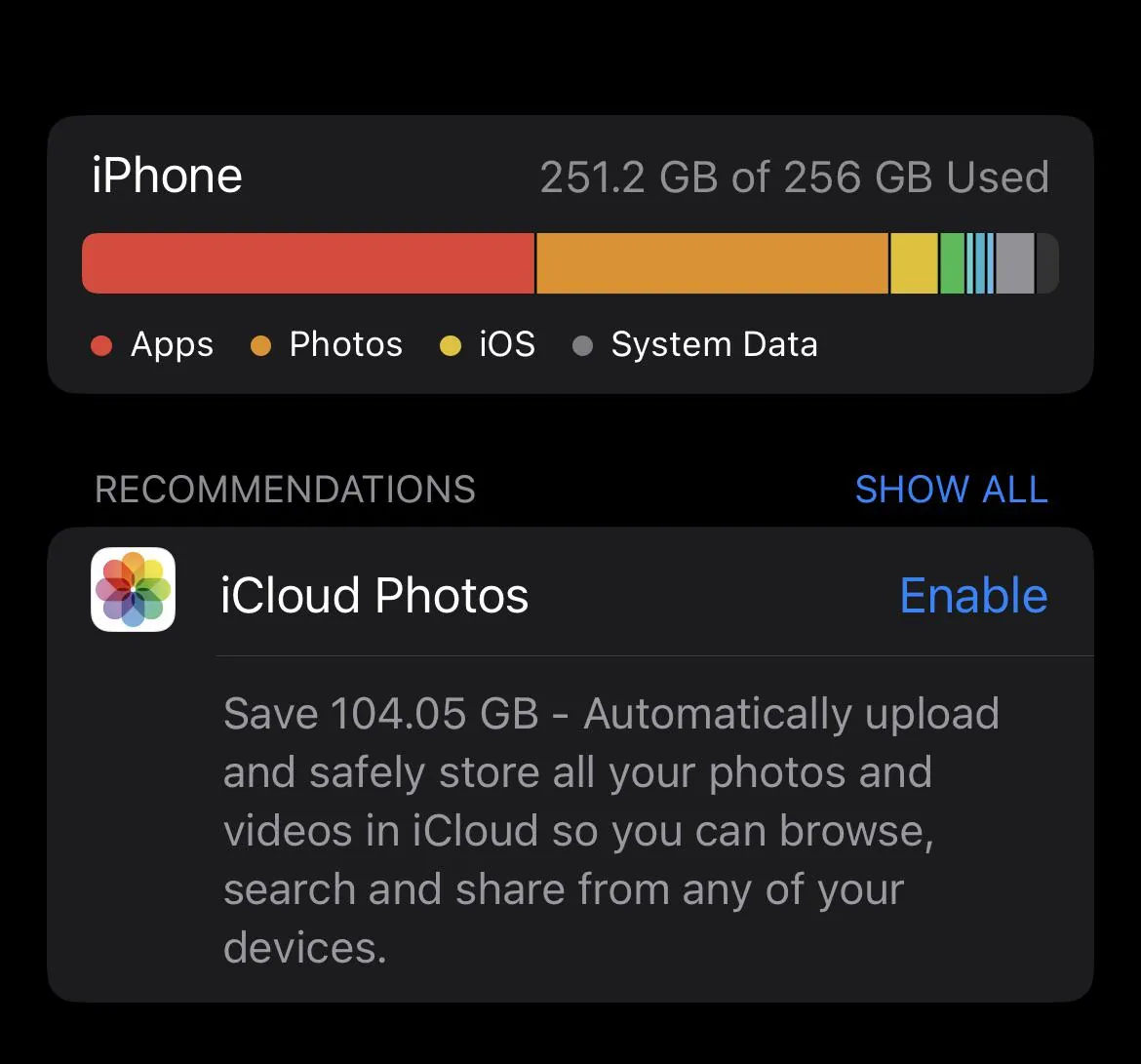
As your iPhone fills up, you can’t use features until you address this issue. iPhone shows you an upgrade path to pay monthly for iCloud. This is the exact moment of maximum user pain — and only Apple gets to appear there. Third-party apps are not allowed know this moment of pain, or to show up in this upgrade path.
This is an engineered advantage.
Apple Music: the unremovable default
Apple Music is the default music app on iOS and macOS. You cannot remove it. Press the music button on your keyboard or in CarPlay, and it opens Apple Music — even if you pay for a competing music service and never use Apple Music.
Oh, and third party music services had to pay 30% of their revenue to Apple, where Apple Music have relatively high cost of goods sold.
This is an engineered advantage.
The browser: $20 billion for your thoughts?
Apple’s Safari browser is the default browser on iOS and macOS. You cannot remove it. On iOS, competing browsers cannot improve on the rendering speed by making a competing rendering engine.
Apple doesn’t let them. And Google pays Apple USD 20 billion per year for the search traffic from Safari.
Building a new rendering engine is a huge undertaking. Probably only Google would do this on iOS. Google would surely rather invest USD 100 billion one time to make a better browser than pay this toll each year. And they could. But…
Keeping every other browser out is an engineered advantage.
The result
Across multiple markets, Apple has engineered advantages for its own products and systematically denied competition.
Apple could do this for any industry. If they wanted to make a fast food restaurant, they could ensure that no other fast food restaurant could take orders on their platform. (Fast food restaurants currently do not pay any fees or revenue share to Apple.) Fast food is out of Apple’s current appetite. But as of today, Apple has engineered maximum revenue against the following markets:
- File storage
- Music
- Web search
- Video games
And there are plenty of other examples.
Apple has the power to control prices and exclude competitors. Apple’s progress in its secondary products is primarily due to its engineered advantages in its primary products.
▧
Comments
There are no comments yet.
Please discuss this topic anywhere and let me know any great comments or media coverage I should link here.